Thursday, 21 April 2022

Home Buyer Guarantee ‘No Silver Bullet’ for Demand

Despite extensions to the Home Guarantee Scheme, buyers may still struggle to afford a house in some of Australia’s cities.

The federal government announced an expansion of the scheme from 10,000 places to 50,000 places during its budget announcement last month.

These places include an extra 25,000 places for first home buyers with deposits as low as 5 per cent, 10,000 places for people to buy new builds in regional areas and 5000 for those trying to buy after not owning property for at least five years.

The scheme facilitates underwritten loans through the government with deposits of at least 5 per cent, allowing buyers to get into a house sooner as they will spend less time saving a deposit.

The federal government also announced an expansion of the price caps for housing in each area eligible for loans under the scheme.

The expansion includes an additional $100,000 to the cap in capital and regional cities including Newcastle and Lake Macquarie, Ilawarra, Geelong, Gold Coast and the Sunshine Coast, with other areas getting an increase of between $50,000 to $150,000.

This would theoretically open up more houses for eligibility under the scheme.

REA Group’s Cameron Kusher said that even with the expansion of the price caps, house prices in certain cities remained out of reach for many and might redirect buyers towards apartments instead.

“If you look at Sydney, Melbourne, Hobart and Canberra, the cap for houses is still lower than the median value for a house in those cities,” Kusher said.

“Less than 50 per cent of the market meets that, so people will probably be more inclined, in those cities in particular, to look for apartments at that price point in order to get involved with the scheme.

“Typically, apartments are more affordable than houses anyway so we will see more of this scheme go towards apartments.”
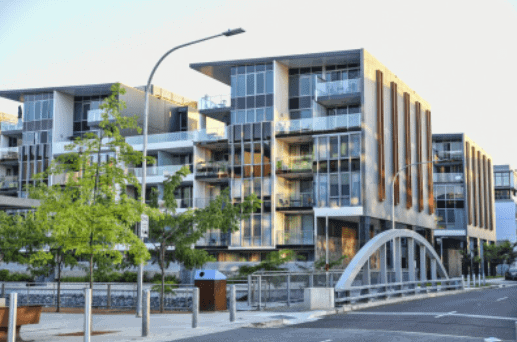
Median house prices
▲ Median house prices are still above the homebuyer scheme’s price caps in some cities which might prompt buyers to look at buying apartments instead.

Capital Economics’ senior economist Marcel Thieliant said that while there would be a small boost in the short term, the Reserve Bank raising interest rates sooner than previously intended will only make things worse.

“The expansion of the scheme will only result in a modest boost to housing demand,” Thieliant said.

“And with affordability set to worsen sharply as the RBA hikes interest rates, it won’t prevent house prices from falling next year.”

Real Estate Institute of Queensland chief executive Antonia Mercorella said the expansion was not enough to address housing affordability.

“While expanding the Home Guarantee Scheme is a good start and definitely a step in the right direction, it must be acknowledged that 50,000 places is not nearly enough to meet national demand,” Mercorella said.

Home Guarantee Scheme price caps

Home Guarantee Scheme
2021-2022 FY 2022-2023 FY
Area Capital city and regional centre Rest of state Capital city and regional centre Rest of state
NSW $800,000 $600,000 $900,000 $750,000
Vic $700,000 $500,000 $800,000 $650,000
Qld $600,000 $450,000 $700,000 $550,000
WA $500,000 $400,000 $600,000 $450,000
SA $500,000 $350,000 $600,000 $450,000
Tas $500,000 $400,000 $600,000 $450,000
ACT $500,000 $750,000
NT $500,000 $600,000

^ Source: Commonwealth of Australia, 2022 Federal Budget

Canstar editor Effie Zahos said it was not only a matter of how many houses were within the price range and therefore eligible for the scheme, but whether buyers were able to afford them in the first place.

“On a positive note, the Home Guarantee Scheme helps first-time buyers enter the market sooner with a smaller deposit, allowing them to save on lenders mortgage insurance,” Zahos said.

“But that’s not the whole picture.

“The government may have increased property price caps under the scheme, but this doesn’t necessarily mean borrowers can afford the repayments, especially when you consider the average gross Australian wage is $90,917.”

Canstar’s analysis looked at the level of income required for buyers. They looked at single buyers, as well as couples with two children and a car loan, who pay a 5 per cent deposit and take a loan at a 2.99 per cent variable home loan rate with a even split in earnings.

NSW buyers needed the largest income to afford the higher end of the price cap, where house prices in city centres are capped at $900,000.

In that state, single buyers will need an after-tax income of $149,868 annually, while a couple would require an after-tax income of $155,934, according to Canstar.

Melbourne and Victorian region cities had prices capped at $800,000, so buyers would need to earn $135,892 as a single and $142,918 as a couple.

Zahos was also wary of the effect of the RBA increasing rates on people’s ability to repay.

Canstar has reported that if the RBA raises its rates by 2 per cent, monthly repayments for those borrowing $900,000 over a 30-year loan would rise by $957 and by $745 for those borrowing $700,000.

“The first Reserve Bank cash rate increase is expected to happen in June, so prospective buyers should make sure they factor potential rate rises into their budgets, and allow for extra financial wiggle room ahead of time,” Zahos said.

House prices have risen nationally by an average of $17,000 during the first quarter of 2022. price growth in Melbourne and Sydney has started to decline while prices in Adelaide and Brisbane are still on the rise.


Article Source: www.theurbandeveloper.com


from Queensland Property Investor https://ift.tt/hpl6u54
via IFTTT

Electrical Union Unveils Build-to-Rent Tower Plan

The Electrical Trades Union will dip its toes into the budding build-to-rent market in Brisbane with the demolition and redevelopment of its premises in South Brisbane.

Plans have been filed for a 30-storey, 358-apartment tower on a 1838sq m site at 37-41 Peel Street.

The Nettletontribe-designed tower would comprise 77 studios, 154 one-bedroom apartments and 127 two-bedroom apartments atop a four-storey podium.

It’s the second 30-storey build-to-rent tower that Netteltontribe has designed, following the Queensland branch of the CFMEU filing plans for a similar scheme across the river at Bowen Hills, which won approval last month.

The ETU’s head office in Queensland, a two-storey commercial building, and a neighbouring house acquired for $1.87 million in 2011, would be demolished to make way for the build-to-rent tower.

An Urbis town planning report for the project said the design of the tower had been “curated to capitalise on the prime inner-city location and access to world-class views”.

“The upper two floors of the building provide high quality, functional communal open space, allowing all residents to enjoy sweeping scenic views of the city,” the report said.

“The build-to-rent model is proposed for the site in response to clear demand for nuanced housing needs in the South Brisbane area.

“South Brisbane is typified by healthcare workers, students, hospitality workers and young professionals. The Queensland government has formally recognised the benefits that the build-to-rent model can offer the community, and consequently are encouraging build-to-rent development within inner-city Brisbane.”

Brisbane City Council
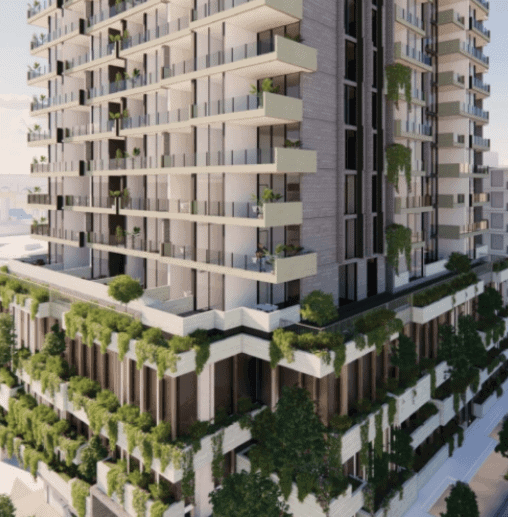
▲ The Electrical Trades Union will shift its premises from Peel Street if its bid to build a build-to-rent tower wins approval from the Brisbane City Council.

The Urbis report said the build-to-rent model was attractive for the Peel Street location due to it being close to employment, entertainment and education, public transport, and an increasing population growth boosting underlying housing demand in the area.

“The location is ideal for the target market for build-to-rent, being mostly millennials with a strong ‘professional’ component that can pay higher rents in order to ensure the expenditure on the high amenity residential services for tenants are economical over time for the operator,” the report said.

The Nettletontribe-designed tower includes communal space at ground floor and on the rooftop alongside the pool deck. The design report said the project would address livability in the rental market in the South Brisbane area.

Parking will be across one basement level and the four-storey podium.

It is understood the ETU has owned 41 Peel Street since the 1980s and will move to new premises when the tower is built.


Article Source: www.theurbandeveloper.com


from Queensland Property Investor https://ift.tt/xGQHkc6
via IFTTT

The standout growth suburbs of 2022 so far

Unlike the madness we saw throughout last year, the property market headlines in 2022 have been littered with talk of growth slowing, stagnating or even reversing.

While that may be the case in some locations, there are still hundreds of suburbs scattered all around Australia where median house prices have soared more than $100,000 in the first three months of the year alone.

Here we highlight some of the surprising suburbs that have delivered outstanding house price growth for 2022 so far.

Brisbane & Queensland

As the top-performing state over the past six months, it’s no surprise that there have been close to 80 Queensland suburbs where house prices have risen by more than $100,000 in the first quarter of 2022.

Whether it’s regional or metropolitan areas, the state’s South East has been the major hotspot for growth.

Brisbane

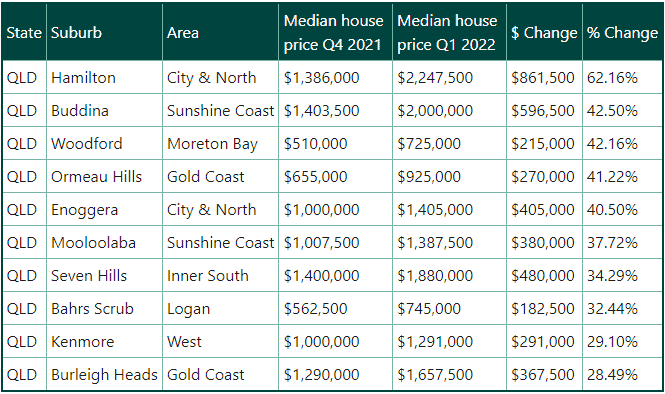
In Brisbane, house prices in the riverside ​​Hamilton soared above +62 per cent in the three month period. Enoggera, Seven Hills and Kenmore also hit massive new highs.

Buddina and Mooloolaba on the Sunshine Coast exemplified the region’s huge demand while Ormeau Hills and Burleigh Heads delivered stellar growth for the Gold Coast.

Even rural Woodford was one of the state’s biggest movers with gains of more than +42 per cent.

As the data shows, there are plenty of locations in every state that have continued to turn in remarkable levels of growth in 2022.

With interest rates tipped to rise within months and new listings increasing all the time, though, the number of suburbs experiencing gains of that magnitude may begin to dwindle as the year goes on.

While there’s no knowing for sure what the future holds, sellers considering listing at some point in 2022 may be best positioned to do so sooner rather than later.

Getting a free estimation of your home’s value and speaking with a top local agent to understand current and future market conditions in your suburb are two of the best ways to start the process on the right footing.


Article Source: www.openagent.com.au


from Queensland Property Investor https://ift.tt/u76icJ9
via IFTTT

Tuesday, 19 April 2022

Charter Hall Files Medical Distribution Centre Plans

Charter Hall is moving ahead with plans to develop a 4.8ha site in west Sydney, lodging plans for the Compass Logistics Estate as the group grows its industrial holdings in the area.

The latest plans for the Blacktown site includes a medical-based warehouse and distribution centre at Lot 1 Eastern Creek Drive, Eastern Creek.

The plans by Qanstruct feature 21,350sq m of warehouse, 500sq m forklift charging area, 1750sq m of office, 14 loading docs and 184 car parking spaces, to be operated all hours.

There would also be a concrete vault for the storage of “controlled drugs”, chillers to reduce operating temperature and secondary packaging rooms for pharmaceutical products.

“The proposed warehouse will be used for general storage and distribution of pharmaceuticals, medical devices and health food products and other related products which will need to be maintained between 15 to 25 degrees Celsius,” the application said.

The ASX-listed company purchased the land as part of a larger 6ha site for $35 million in 2018 to maximise its land bank close to critical infrastructure. The purchase was made through a joint partnership between Charter Hall Prime Industrial Fund and Core Logistics Partnership.

In mid-2021 the fund also acquired the 90-year leasehold for 35ha of industrial land at Light Horse Business Club in the same region from the Western Sydney Parklands Trust.

Charter Hall
▲ The state significant plans for Charter Hall were designed by Qanstruct with landscaping by Habit8 and are currently on exhibition.

The five-year development agreement would see Charter Hall develop the estate with a gross lettable area of 170,000sq m and an on-completion value in excess of $300 million.

CPIF fund manager Richard Mason said it was their strategy to acquire and develop well located sites close to major transport infrastructure with easy access to large consumer markets.

“The momentum in demand for strategic located industrial space is seeing record leasing activity, particularly for larger automated purpose-built facilities,” Mason said.

“The shortage of zoned, ready to develop land, provides the opportunity to further expand our modern logistics portfolio.”

The industrial market in Eastern Creek is rapidly expanding with infrastructure investments in Sydney’s western growth corridor including WestConnex tunnel project and the Western Sydney Aerotropolis.


Article Source: www.theurbandeveloper.com


from Queensland Property Investor https://ift.tt/TQc1rb4
via IFTTT

Three regional property hotspots investors need to watch

Houses in regional Australia have experienced outstanding capital growth, and there’s no end yet in sight.

There’s also a well-documented shortage of property to lease in many of the areas, with rents on a similarly steep upward trajectory.

“But investors need to choose wisely,” advises national property analyst Terry Ryder, the founder of hotspotting.com.au.

“You need a number of factors, like affordability, a strong and diverse local economy, and a healthy infrastructure spend by governments.

“If you’re missing any one of those, like the diverse economy, then it’ll be an investment that’s much more vulnerable and high risk.”

After crunching all the numbers, lifestyle trends, and infrastructure projects both under way and proposed, Ryder has favourite spots for investment in each state and territory.

In NSW, for instance, he favours the old country music capital of Tamworth in the north-east.

Its median house price, according to Domain’s most recent House Price Report, sits at $410,000, rising 9.3 per cent over the past year.

Moreover, the city is undergoing a significant transformation into a transport hub and a centre for many renewable energy projects.

“We don’t rely solely on mining or any single industry but have a lot of different types of businesses and industries here,” says Justine Reilly of PRD Tamworth.

“For those wanting to live here, it is a great place, but there’s simply not enough rental property available.

“The vacancy rate is down to about 1.5 per cent, and there’s so much more demand than supply.”

In Victoria, Ryder sees the City of Brimbank in Melbourne’s western suburbs, between 10 and 20 kilometres from the CBD, as another hotspot for investors.

Again, its relatively low house price point of $500,000 and $600,000 – compared with other areas of the city – and its university campuses, spending on roads and rail links, and repurposing of former industrial areas for residential zones help increase the attraction.

It has an acute shortage of rental accommodation, too.

“Every time one comes up, it’s snapped up immediately,” says Cherie Fox, property manager at Fox Real Estate in the area.

“There’s a particular shortage of four-bedroom homes.

“We often achieve more than the rental asking price. We were asking $500 a week [for one], but someone offered us $600 because they were just so desperate to find something.”

In Queensland, Ipswich, 40 kilometres west of Brisbane, with a median house price of $430,000, wins Ryder’s vote.

“Brisbane has been arguably the hottest market in Australia, and Ipswich is the cheapest part of that market,” he says.

“It has a lot to offer, it’s seen a massive uplift in sales in the last 12-18 months, and we expect major price rises.”

Principal of Ipswich Real Estate Dylan Ansems agrees. He says that vacancy rates are now less than 1 per cent, signalling a real dearth of rental properties.

“We’re getting 30 to 40 people coming to every house viewing and 50 applications for every property,” he says. “Rents have gone up from $360 or $370 a week 12 months ago to $450 to $470 now. It’s a really hot market, for sure.”


Article Source: www.brisbanetimes.com.au


from Queensland Property Investor https://ift.tt/0PJduOe
via IFTTT

Queensland’s millionaire rows: The state’s top suburbs recording unheard-of price growth

They’ve long housed the lion’s share of lavish Queensland homes but now, after 24 months of exponential growth, medians across a handful of Queensland’s priciest suburbs are outpacing even San Francisco.

Sunshine Beach stole headlines late last year when house price medians soared to $50 shy of $3 million, but just as all eyes turned north to the Sunshine Coast suburb, a smattering of other “millionaire rows” across Brisbane and the Gold Coast also strengthened their hegemony in the luxury market.

They clocked up an eyewatering annual growth of up to 58 per cent, with Mermaid Beach on the Gold Coast, alongside Brisbane’s New Farm and Teneriffe, collecting record median highs of more than $2 million according to Domain’s latest House Price Report.

The Gold Coast’s Paradise Point and Surfers Paradise, with Brisbane blue-chip suburb Ascot, were hot on their heels following a growth spurt that pushed medians north of $1.8 million.

Incredibly, they’re figures that are comparable – or even higher – than the San Francisco County median of $A2.174 million, according to the California Association of Realtors.

And with the “Zoom change” trend drawing more remote workers to sunny Queensland, more suburbs could soon enter the exclusive list.

According to the report, Mermaid Beach is now the second most expensive suburb in Queensland – after Sunshine Beach – following a 42.6 per cent hike in the median house price to $2.375 million in December 2021.

17 Hedges Avenue, Mermaid Beach QLD 4218

And while the prestigious pocket is sans a Golden Gate Bridge, it does house the famous Hedges Avenue – colloquially known as “millionaire’s row”.

Boasting absolute beachfront properties where not even a path separates the palatial palaces from the dunes, the exclusive strip maintains the Gold Coast’s highest house sale at $27 million, achieved for 33-39 Hedges Avenue in 2008.

“I think there’s been a reset of people’s minds globally about what they want [as a result of the pandemic],” says Alex Caraco of Raine and Horne Elite.

“A lot of people are not satisfied with their life and then when there’s a war people do assess things very quickly. So, there’s definitely a lot more interest in the Gold Coast market [right now].

“People genuinely believe they want the best and the best is Hedges Avenue … and they are no longer coming here to buy and sell a holiday house, but to live.”

It’s a sentiment that allowed Nine Gold Coast news co-presenter Eva Milic, and her property developer husband Marcus Dore, to offload their Hedges Avenue beach house in an off-market deal worth $14.5 million in January this year, and it’s one Caraco says is already fuelling strong interest for a four-level mega-mansion he’s marketing for $20 million at nearby 17 Hedges Avenue.

“Just the size of the home is remarkable. It’s 817 square metres … it has a lift inside and it’s made of concrete and master-built,” Caraco says.

“Generally speaking, the shortage of inventory on the street makes this home quite special. And it last sold 15 years ago.

“I’ve had 56 inquiries on the property so far … four of those are currently selling in Sydney and Melbourne.

“I also have Dubai and UK buyers looking here.”

Up in Brisbane’s Teneriffe, where the land alone is worth its weight in gold, Ivo Kornel and Olivia Plimmer-Wilson, of Sixty Four Property, are marketing a luxurious 1900s estate at 58-62 Kingsholme Street for circa $10 million.

“It’s a truly special home … it has that sense of history but you also feel like you’re in the Hamptons on a Brisbane budget,” Plimmer-Wilson says.

 58-62 Kingsholme Street, Teneriffe QLD 4005
58-62 Kingsholme Street, Teneriffe QLD 4005 

While the home was launched to the market just weeks ago and can be viewed via private inspections only, she said the size of the block – 1151 square metres – made this estate a rare gem in a suburb where large parcels were increasingly being carved up.

“Homes like these don’t come up very often … and I think the good thing about New Farm and Teneriffe is they are suburbs that, even in a bad market, retain their value,” she says.

“Over the past two years they have seen a huge spike and since then it has not slowed down but they have found their footing.”

That footing is a house price record median high of $2.15 million – a figure that climbed 30.7 per cent last year.

Back down on the Gold Coast, in another of the city’s “millionaire rows”, Sam Guo and Julia Kuo, of Kollosche, are marketing a waterfront mansion at 60 Admiralty Drive, Paradise Waters, for $13 million-plus and said the incredible views added to the star-power of the street.

“I think the Gold Coast has just taken off. It has been undervalued for many years and buyers believe that here it’s nice, it’s cheaper [compared to Sydney and Melbourne] and they get a much better lifestyle,” Guo says.

With more and more Gold Coast suburbs set to join the $2 million median club and outstrip the San Francisco median, that “cheap as chips” belief could, however, become a thing of the past.

“We are seeing increased international interest … and now that the borders have opened [we’ll see even more],” Guo says.

Over the past 12 months, median house prices in Paradise Waters climbed an astonishing 58.3 per cent to $1.9 million.


Article Source: www.domain.com.au


from Queensland Property Investor https://ift.tt/nLuKzh8
via IFTTT

Squeeze on first-home-buyers likely to worsen

first-home-buyers are likely to struggle even more to get a foothold on the property ladder this year as higher interest rates, rents, and the cost of living conspire to reduce their capacity to save and to borrow.

The national residential property rental vacancy rate fell to just 1 per cent in March, the lowest rate since 2006, figures from SQM Research show.

Over the past 12 months, capital city house rents increased by almost 15 per cent, while unit rents have climbed more than 11 per cent. Sydney’s vacancy rate in March was 1.6 per cent and, in Melbourne, it was 1.9 per cent.

Vacancy rates this low strongly favour landlords and their ability to increase rents.

Andrew Wilson, chief economist at My Housing Market, says the key problems for first-home buyers, particularly in Sydney and Melbourne, are skyrocketing rents and a rapidly rising cost of living that is restricting their capacity to save and borrow.

“I think the economic environment is working very much against first-home buyers,” Wilson says.

After a two-year property boom, the recent slight easing of house prices in Sydney and Melbourne has done little to help those looking to get into the market for the first time.

Mortgages for first-timers in January were at their most unaffordable since 2011 for Victoria, and 2013 for NSW, My Housing Market figures show.

Affordability improved slightly in February – the latest available data – as property prices in both cities fell slightly.

Sydney dwelling prices were 0.2 per cent lower in March, following a decline of 0.1 per cent in February, figures from CoreLogic show. Melbourne prices were 0.1 per cent lower, following no growth in February.

The average first-home buyer mortgage in the three months to February 28 was highest in NSW at $592,107, followed by the ACT at $531,956 and Victoria at $502,478, My Housing Market figures show.

The consensus among economists is the Reserve Bank of Australia is likely to start increasing official interest rates in June – soon after the May 21 federal election. The cash rate is forecast to reach at least 2 per cent, or even higher – up from a record-low 0.1 per cent now – over the next 18 months to two years.

The interest rate increases are likely to be passed on in full by lenders, adding thousands of dollars a year to repayments and further reducing the borrowing capacity of first-home buyers.

Angie Zigomanis, director of Charter Keck Cramer’s research and strategy team, says weak wages growth is not helping to offset the higher cost of living.

More property investors have also entered the market, which can sometimes “crowd out” first-timers, as they often buy the same types of properties as first-home buyers, Zigomanis says.

Wilson says that affordability for first-home buyers is likely to worsen this year, with higher interest rates and more migrants and international students coming to Australia after being locked out during the COVID-19 pandemic, adding pressure to an already tight rental market.

Zigomanis says one way to help ease the first-home buyer affordability crunch is to increase the supply of more affordable housing.

Cash handouts and incentives for first- home buyers typically end up flowing through to higher house prices, he says.

In last month’s federal budget, the government expanded the number of places available in its low-deposit scheme. This is a program under which first-home buyers, and others, can buy new or existing dwellings with a deposit of only 5 per cent. It includes assistance for regional property buyers.

Labor, if elected at the federal election, is promising to create a program to help 10,000 first-home buyers a year in regional Australia to buy a home.

Wilson says the low-deposit schemes help, as often the biggest hurdle to getting a start is the deposit, but buyers still have to be able to afford their mortgage repayments.

Sally Tindall, research director at RateCity, has warned that if forecasts of falling house prices turn out to be correct, first-home buyers who put down only a small deposit could find themselves in “negative equity”, where the mortgage is larger than the market value of their home.


Article Source: www.brisbanetimes.com.au


from Queensland Property Investor https://ift.tt/5HvjOKT
via IFTTT

QLD island property listed for less than house in parts of Logan

This spectacular island property off Far North Queensland has two houses, a beach hut and views to rival the Maldives. But this one w...