Friday, 25 March 2022

The top 6 Gold Coast apartment developments being built by Hutchinson Builders

heir extensive workbook sees Hutchinson’s deliver around $2.5 billion worth of projects annually, everything from sports stadiums to hotel towers.

The nationally recognised builder Hutchinson’s, one of the best construction firms across Australia, dates back well over a centurry.

Founded in 1912, current chairman, Scott Hutchinson, is now the fourth generation Hutchinson to preside over the business.

Their extensive workbook sees Hutchinson’s deliver around $2.5 billion worth of projects annually, everything from sports stadiums to hotel towers.

They”re always one of the most sought-after building firms when it comes to residential apartment development. Of​f the plan buyers get an almost unwavering sense of guarantee when Huthcinson’s is appointed the builder of the project.

We’ve taken a look at the top six Gold Coast apartment developments Hutchinson’s have been commissioned to build, some already with construction underway.

1. Emerson Kirra

Developer: Hirsch & Faigen

Architect: Rothelowman

Hirsch & Faigen have continued their legacy of pioneering excellence on the Southern Gold Coast with Emerson, a boutique edition of 27 residences at Kirra, designed by Queensland’s premier architecture studio, Rothelowman.
Emerson Kirra
Emerson Kirra
100 Musgrave Street, Coolangatta QLD 4225 

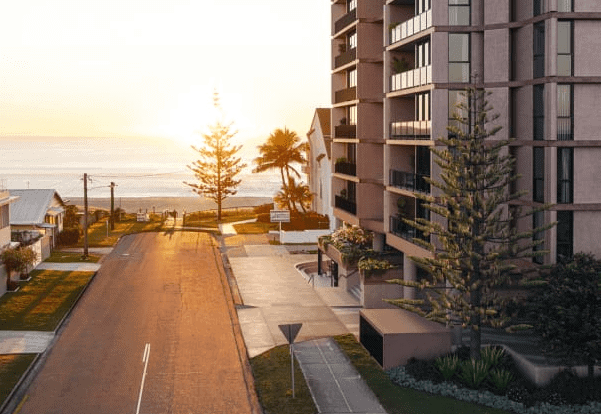
Just the second Gold Coast project for Hirsch and Faigen, Emerson Kirra is located parkside at 100 Musgrave Street, looking over the canopy of Norfolk Pines towards an unspoilt Kirra Beach.

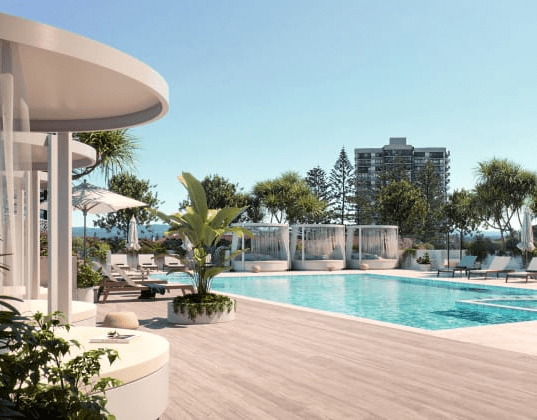
Emerson features sophisticated amenities that enrich a social, active and productive lifestyle, including a residents’ lounge, recreation deck, resort-style pool and sun lounge, while bedrooms feature floor-to-ceiling windows that offer unrivalled views across the ocean and distant Gold Coast skyline.

With a strong run of sales at the start of the year, only four half-floor apartments remain amongst the 27, as well as the $8 million full-floor penthouse.

The build is expected to be complete by September 2023.

2. Yves

Developer: Hirsch & Faigen

Architect: Rothelowman 

Yves is a contemporary collection of three towers, launched just before the end of 2021, marking Hirsch and Faigen’s third Gold Coast development.
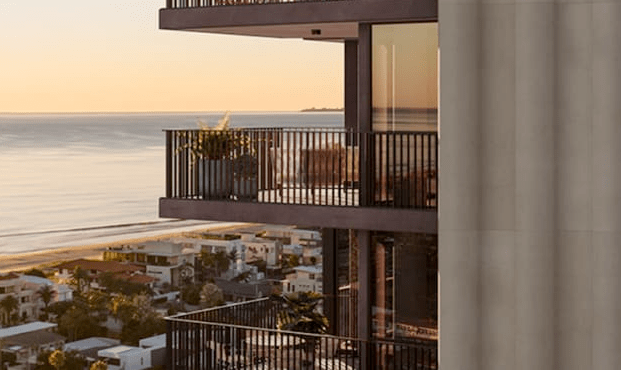
Yves
Yves
7-9 Mermaid Avenue, Mermaid Beach QLD 4218 

The $200 million Yves project will have 145 apartments across the three 26-level towers, designed by Rothelowman, who have been Hirsch and Faigen’s go-to architect on the Gold Coast.

Crowning Yves is the penthouse, spanning 335 sqm of internal space, plus an additional 71 sqm of private external living. It will have four bedrooms, four bathrooms, a multi-purpose room and a study.

The building’s are topped with outdoor rooftop seating, with the residential amenity located in the shared lobby, which were designed as a greenhouse to create a suburban feel.

There will be a north-facing swimming pool as the centrepiece, as well as a pool and yoga deck, a gym, sauna, recreation lounge and barbecue seating.

3. Cala Dei

Developer: Spyre Group

Architect: bureau^proberts

Hutchies are currently constructing the sold-out Cala Dei, Spyre Group’s redevelopment of the Hotel Kommune in on Coolangatta’s dress circle Marine Parade.
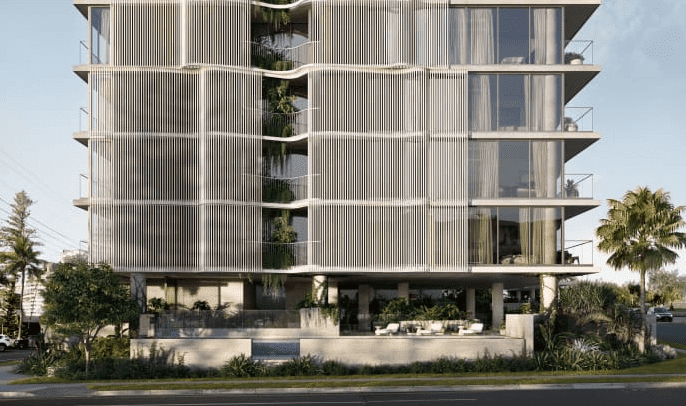
Cala Dei Residences
Cala Dei Residences 144 Marine Parade, Coolangatta QLD 4225

They’re transforming the Komune Resort into a 12-level residential development designed by bureau^proberts, homing a total of 31 apartments.

Spyre Group director Andrew Malouf said the company had taken a considered approach to developing the site.

“The site was originally intended for a 27-storey development, but we have significantly reduced this footprint,” Malouf said.

“Instead, we propose to create luxury residences that complement the world class surfing reserve status of the southern Gold Coast beaches,” Malouf said at the time of lodgement.

4. The Monroe

Developer: Lacey Group

Architect: Plus Architecture

Hutchinson’s are currently construction The Monroe, the Lacey Group’s luxury development on the Southern Gold Coast’s exclusive Jefferson Lane, in the heart of Palm Beach. Designed by Plus Architecture, The Monroe all-but sold out all of its apartments in May 2021, after just two weeks of being on the market.
The Monroe
The Monroe 124-126 Jefferson Lane, Palm Beach QLD 4221
The project will see 33 two and three-bedroom apartments created, as well as a townhome and penthouse. Some 250 sqm of space will be dedicated to the rooftop terrace, which will feature a rooftop infinity pool, a fire pit, barbecue facilities, and a residents’ terrace comprising of indoor and lush outdoor lounges and recreation spaces, all set amongst panoramic ocean and hinterland views.

Architecturally inspired by the Gold Coast’s varying landscapes, The Monroe features floor to ceiling glass in living areas, maximising views and natural light throughout the apartments, while all corner apartments allow for cross ventilation.

Offering direct access to Palm Beach, transitioning between home and nature is designed to be as fluid as its surroundings.

5. 123OBR

Developer: Bottega Group

Architect: Woods Bagot

The Brisbane-based developer Bottega Group are behind the $52 million Broadbeach apartment block, 123OBR, described as vertically stacked verdant Queensland beach houses.

Named after its location of 123 Old Burleigh Road, one row back from Broadbeach, 123OBR will have 14 whole-floor apartments, as well as a whole floor resort deck half way up the tower.
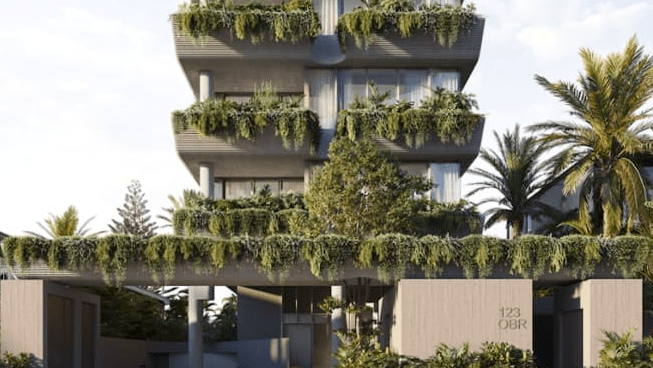
123OBR
123OBR
123 Old Burleigh Road, Broadbeach QLD 4218 

Designed by Woods Bagot, the typical whole-floor apartment will offer 224 sqm of living space featuring three-bedrooms with walk-in wardrobes, two-bathrooms and an open-plan living and dining arrangement, which have views through the floor-to-ceiling glass windows.

Included in the 14 apartments is a two-level penthouse crowning the building and a two-level pool house starting from the ground floor.

The pool house spans 388 sqm across two levels, with five-bedrooms, all with walk-in wardrobes, two powder rooms, a separate laundry, a home cinema/family room, a wine cellar, a private pool, garden and a separate balcony.

The two-level penthouse covers 384 sqm, comprising four-bedrooms, each with walk-in wardrobes, as well as three-bathrooms, two powder rooms, two internal verandas and two separate living and dining areas, a private study and a gym.

All residents of 123OBR will enjoy five-star resort amenities on level six with a poolside retreat adorned with curated artwork.

This space provides residents an extension of their private living spaces with the inclusion of additional facilities such as a commercial kitchen, space for a shared home office or library and private dining for guests.

6. Hemingway

Developer: Hirsch & Faigen

Architect: Rothelowman 

Hemingway, just off the sand at Palm Beach, was the first Gold Coast development for Hirsch and Faigen, delivering a variety of one, two, three and four-bedroom apartments.
Hemingway
Hemingway
1267-1273 Gold Coast Highway, Palm Beach QLD 4221 

The team reimagined the standard bulky apartment block into an innovative shape form, utilising curvature and cut outs to maximise and enhance views from every Hemingway apartment.

Residents of Hemingway will have access to a range of lifestyle amenities including its own ground-level café and communal open space with a swimming pool, pool lounge, barbecue area and outdoor cinema.

Coined after the famous author and featuring a distinct blush façade, construction of the 14-level building is expected to be complete by September 2023.

The $75 million project sold out all of its 78 apartments within a few months of its launch earlier last year.


Article Source: www.urban.com.au


from Queensland Property Investor https://ift.tt/B8uHvKJ
via IFTTT

Neighbourhoods feeling the heat as medium density housing robs suburbs of street and garden trees

New housing subdivisions, smaller yards and a dependence on air conditioning have resulted in a 30 per cent decline in Australian residential trees in the past decade, leading to hotter neighbourhoods and increased energy costs.

The dramatic loss of suburban trees has led to UniSA environmental researchers calling for new national planning policies to mandate the inclusion of trees in any development or housing design.

Qualified architect and UniSA PhD candidate Mina Rouhollahi says a recent study of 90 Australian residential suburbs shows tree-inclusive gardens and yards provide up to a 30-metre buffer around each land unit during summer heatwaves.

“Deciduous trees, in particular, provide summer shade, while their bare branches allow heat to penetrate into the house in winter,” Rouhollahi says.

“Local government focuses on public parks and urban forests but it’s the residential trees that make a significant difference to home energy costs. Also, private land tree planting provides a better environment for children, improving urban aesthetics and increasing home values.”

Rouhollahi and her UniSA colleagues, including supervisor Professor John Boland, have designed an optimal tree strategy for different housing configurations, nominating specific tree types, tree volumes, and correct placement to achieve maximum benefits.

Their strategy is outlined in a new paper published in Energy and Buildings.

It incorporates all seasons and microclimates, allowing planners, developers and designers to adopt the tree options that suit specific environments.

Their research recommends five optimal tree arrangements depending on deep soil availability and space.

“We need a more cohesive urban planning approach to compensate for residential tree loss in recent decades and regulate heat as well as curb energy costs,” Prof Boland says.

The researchers’ proposal aligns with the latest IPCC report, recommending increased space between houses to allow for more trees, as well as utilising reflective building materials. The report says taking these steps could significantly decrease urban heat, reduce the reliance on electricity, and thereby cut blackout risks.

A major challenge, however, is to change Australians’ attitudes, increasing the focus on home energy efficiency through appropriate tree planting, double glazing and better house design, moving away from air conditioning reliance.

“Australians have the power to influence the design process, requesting tree allocation when building or buying their home, in the same way they insisted on a double garage in the 1990s. The focus has shifted to boosting our wellbeing and the role that trees play in this,” Rouhollahi says.

“Redesigning our homes with trees in mind will better serve residents, cities, and the environment. Trees have numerous benefits: they shield us from the sun, provide wind protection, reduce stormwater runoff, passive cooling and natural ventilation. The net result is a more energy efficient home, lower energy costs, reduced air conditioning, CO2 emissions and less polluted air.”

Current residential development policies rely on public and communal open spaces to compensate for the lack of trees in private yards. Yet, this does not provide energy savings, the researchers say.

The researchers hope their recommendations, outlining different optimal tree options, will be adopted by local councils and embedded in their planning policies.


from Queensland Property Investor https://ift.tt/VKWRPC8
via IFTTT

Central Equity seeing diverse buyer mix at Pacific One, Surfers Paradise apartment tower

The development has been many years in the making for Central Equity, who acquired their first site on Frederick Street in 2007

The Melbourne-based developer, Central Equity, is the latest interstate developer to take a Gold Coast apartment project to the market.

Central Equity, HIA Victoria’s most awarded apartment developer who count Melbourne Grand, Southbank Place and Victoria Tower in their completed portfolio of over 80 projects, has begun early sales at Pacific One, located in a prime position on the corner of Frederick Street and the sought-after Garfield Terrace.

The $500 million tower, with 359 apartments across its 55 levels, has seen a diverse mix of buyers given the variety of floorplans on offer, Central Equity Executive Director Karl Kutner suggests.

“There’s not many projects at the moment in this location that offer one, two, three and four-bedroom apartments,” Kutner says, adding that the market has been starved of this type of product.

Pacific One
Pacific One Corner of Frederick Street & Garfield Terrace, Surfers Paradise QLD 4217 

The rooftop is solely for the use of the skyhome and penthouse residents, a collection of larger and luxuriously specced apartments on level 41 and up. On the roof is a glass edged pool, gym, sauna, and al-fresco dining spaces.

The rest of the building has access to the Pacific Club on level two, which has a further two pools, another gym, sauna, indoor and outdoor lounges, dining and barbecue areas. There’s around 2,000 sqm of facilities all up.

The development has been many years in the making for Central Equity, who acquired the first block on Frederick Street in 2007 and progressively amalgamated the neighbouring properties that saw them grow the overall site to 3,259 sqm.

The location has been a driving factor for buyers, Kutner notes.

“It’s in that pocket in the south of Surfers, being away from the bustling heart while also being just a short walk away from the action.

“Another big factor has been where it sits in proximity to the beach. It’s across the road from Northcliffe Surf Club and a patrolled part of the beach, which has proven to be an important part of a buyers decision.”

There’s been a wave of local residents who have wanted a new apartment in the same beachside area, but have previously been outpriced with some of the beachside developments.

“Locals living in older style apartments who don’t want to leave the area have been short of options until Pacific One, so unsurprisingly there’s been a lot of enquiry from this cohort of buyers.”


Article Source: www.urban.com.au


from Queensland Property Investor https://ift.tt/TjWI5KU
via IFTTT

Wednesday, 23 March 2022

How GRAYA created Maison, their luxury New Farm apartment development

When Rob and Andrew Gray first laid their eyes on the potential New Farm site of their first multi-residential development, they knew they were onto something special.

When leading Brisbane-based residential developers, Rob and Andrew Gray of Graya, first laid their eyes on the potential New Farm site of their first multi-residential development, they knew they were onto something special.

Securing the perfect multi-residential site in New Farm, arguably Brisbane’s best lifestyle suburb, proved to be challenging from the outset, with Graya taking more than two years to select the site after considering a number of other options.

“We knew finding a site that fit the criteria we needed wasn’t going to be easy, but given our buyer demographic, we had a fairly tight brief on what we needed from it–with river and city views being at the top of our list” Andrew said .

“With its proximity to Brisbane city, and major lifestyle precincts including James Street, Teneriffe, and Howard Smith Wharves, property and real estate in the area is hard to come by and tightly held”.

Once the site at 60 Moray Street had been secured, both Rob and Andrew knew they had a site that would allow them to do something new, innovative, and ultimately iconic.

GRAYA

With its grand corner frontage, the design potential of the site was unlimited, and there was an opportunity to execute something that was design-driven and not commercially driven like many other developments in the area.

“Being our first multi-residential development, I wanted this development to be design-led and reinvigorate the tired streetscape of Moray Street currently littered with run-of-the-mill brick unit developments,” Rob said.

“We also wanted to offer something unique to the suburb too, full-floor sky homes rather than jam packing as many units as we could in.”

The concept of Maison was born, and a brief was conceived to deliver something completely innovative to the suburb, some of the main design elements encompassing soft curves, plank form concrete and a major focus on landscaping.

“The core focus of Maison was the environment and adding a living, breathing piece of architecture that added significant aesthetic value to the New Farm streetscape,” Rob added.

“Yes, Maison had to offer residents unrivalled luxury internally, but it also had to give back to the suburb in terms of its presence.”

Rob and Andrew’s vision for Maison is evident just by looking at the stunning photos taken of the project.

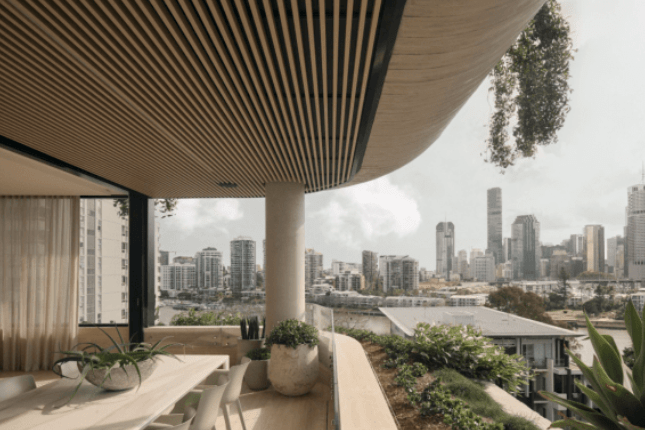
The brutal aesthetic of the surrounding buildings is instantly softened by Maison’s bespoke curved planter boxes which were a first of its kind for this project. The level of detail (and commitment to the project brief) is evident when looking closely at the planter boxes with their ‘wood form’ look further elevating Maison’s façade.

Unlike other projects in the area, significant time and effort were invested in the ‘luscious’ landscape design of Maison. Given it was a key design feature of the development, and a major selling point, Graya ensured the long-term viability of the landscaping by selecting a range of drought-tolerant plants as well as implementing a grey-water reticulation system to minimise the water usage of the building-another major sustainability point of the project.

“Maintaining a green building can be challenging and costly if not implemented correctly. We’ve spent time in designing a system that is viable for the long-term, but also does not compromise on the aesthetic of the building design inside and out”, Andrew said.

One of the most eye-catching elements of this project is the juxtaposition it creates between old and new architecture and just how far Brisbane has come along in terms of building design.

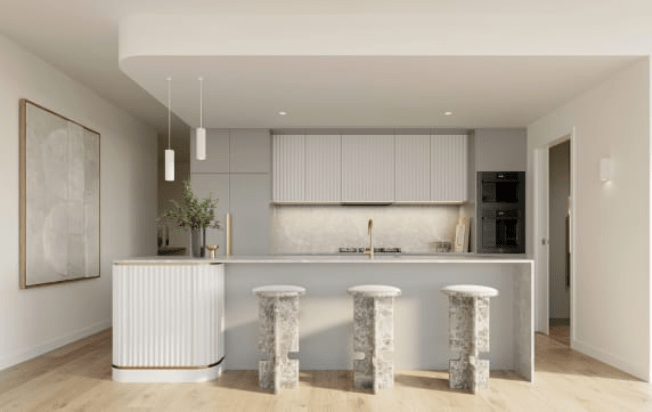
This commitment to design excellence is a consistent theme-with each of the beautifully appointed luxury sky homes featuring carefully curated, and high-end, fittings and fixtures as you’d expect with a development of this calibre. Residents also have access to a fully-functional rooftop community area and pool which enjoys commanding city and river views.

Maison is evidence that multi-residential buildings do not have to conform to the normal standard, that not all of a project’s budget has to go into the internal fit-out. Sometimes, investing time and effort into the facade of a building is worth the reward in terms of its impact on elevating the streetscape of a suburb.”

At Graya, we’re not interested in knocking out run-of-the-mill developments with a pure focus on cramming as many units in as possible. We want to deliver iconic architecture projects that elevate our city-that contribute to the community in terms of their aesthetic.

We feel there is a gap in this high-end multi-residential market, and we’re looking forward to executing more design-led owner occupied projects in the years to come”, Rob said.

Graya has a range of upcoming multi-residential developments coming up, including the 21-unit development Canvas Bulimba, and another two projects, York, and Blook, in New Farm.


Article Source: www.urban.com.au


from Queensland Property Investor https://ift.tt/DidtpE8
via IFTTT

Rainbow Bay set for new $110 million apartment development as Holm secures development approval

Holm, at 44 -50 Eden Ave, will comprise 86 apartments across its 12 levels, with the two-bedroom units starting from well under $1 million.

Coolangatta’s Rainbow Bay area has arguably been the hottest proposition for apartment seekers since the pandemic drove the masses toward the Gold Coast.

Local and interstate buyers were swooping on anything that came on to the market, and even before then, with a number of developers securing sell outs before the general public could even enquire.

Chapter Two, a development group led by Jon Quayle and Oliver Bagheri, in collaboration with Summa Group, identified a gap in the market with their newly approved Eden Avenue project, Holm.

They’re offering buyers a chance to secure a spot in the sought-after enclave, without the price tags of some of the more high-end, boutique developments closer to the beach.

Holm, on a generous 1,924 sqm site 44 -50 Eden Ave, will comprise 86 apartments across its 12 levels, with the two-bedroom units starting from in the $800,000’s, one of the most affordable products in the area.

They’ll offer a rare trifecta of views, with ocean river and Gold Coast hinterland outlooks, including views over Snapper Rocks.

Designed by Plus Architecture, some of the two-bedders will offer additional multi-purpose rooms, the same deal with the three-bedroom apartments.

Rainbow Bay

There will also be two unique townhouses and a courtyard unit located on ground floor, adding to the diversity of the residential offering.

“In all our developments, we love to showcase built form inspired by the natural beauty that surrounds it.,” Jon Quayle, Chapter Two Director said.

“Holm’s flowing curves, lush greenery, natural elements and light filled spaces are timelessly Rainbow Bay.”

“Rainbow Bay is recognised as one of Australia’s premier beach destinations, north facing like Noosa and Byron Bay but more accessible and attainable, with stunning lifestyle amenity, natural beauty and some of the coast’s best dining and entertainment.

“Holm has been designed to echo this, providing premium living spaces with superb resident amenities that bring together all the elements that people seek in sophisticated coastal living.”

The development will incorporate a top-floor residents’ club on level 12 that will include an ocean view infinity-edge pool; spa, sauna and steam room; a modern gymnasium and yoga deck; an outdoor dining area with barbecue facilities; and a fire pit space.

It will also include a dedicated work-from-home area with private office studios, resident’s library and function room.

The entry has been designed to give residents a luxury welcome, with natural stone features, timber flooring, Italian appliances, full-height glazed windows, and secure resident parking.

Holm is the third project that has seen Chapter Two team up with Summa Group, following Calista, a collection of four townhouses in Palm Beach, and Eden Collection, another boutique collection of just five townhomes which are set to launch in Tugun soon.

Demand for apartments on the southern Gold Coast has never been stronger with the latest Urbis Apartment Essential report revealing the Southern Beaches market, which includes Coolangatta, remains in serious undersupply.

CBRE Gold Coast has been appointed to handle the sales and marketing of Holm as it launches to the market in the coming months.

Chapter Two was formed a little over a year ago by corporate property veterans Jon Quayle and Oliver Bagheri. Since then, the company has secured a pipeline of 13 residential projects across Brisbane and the Gold Coast totalling over $300 million in gross value.


Article Source: www.urban.com.au


from Queensland Property Investor https://ift.tt/APrwvVc
via IFTTT

Tuesday, 22 March 2022

Six Ways Covid Has Shaped the Housing Market

The global pandemic has catalysed remarkable shifts in the Australian housing market.

From the temporary shutdown of cities to an unprecedented monetary policy strategy, a new-found popularity of regional and low-density housing preferences and the introduction of various government home buying incentives, the Covid period has had distinct impacts on the composition of buyers and the dynamics of the housing market.

Here are six of the major impacts on the Australian housing market two years on.

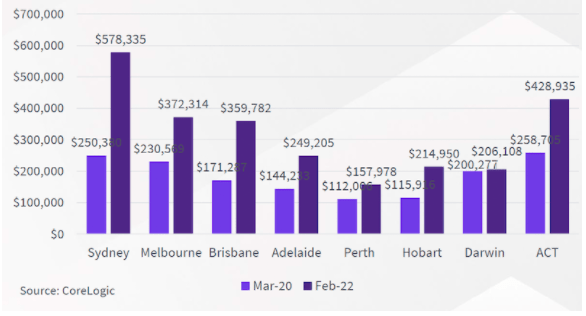
1. Australian home values rose 25 per cent to record highs

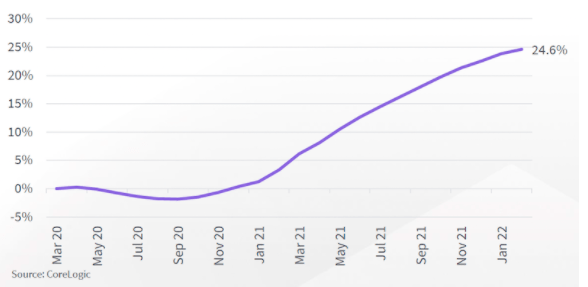
Despite an initial dip, housing values rose 24.6 per cent between the end of March 2020 and February 2022.

The table below shows the cumulative change in the national CoreLogic Home Value Index since the onset of Covid.

The index had a relatively small decline at the onset of Covid, with sales and listings volumes being far more impacted than prices.

National home values declined -2.1 per cent between April 2020 and September 2020, before soaring amid low interest rates, high household savings, government grants and a sharp reduction in the supply of housing.

By February 2022, CoreLogic estimated the total value of residential real estate to be $9.8 trillion, up from $7.2 trillion at the onset of the pandemic. The median Australian dwelling value increased $173,805, to $728,034.

Cumulative change in home value index

home value index

2. First homebuyer activity spiked

First homebuyers were a sizable part of housing demand at the start of the pandemic.

This cohort took advantage of more affordable housing options following the earlier downturn, along with record low mortgage rates and government incentives.

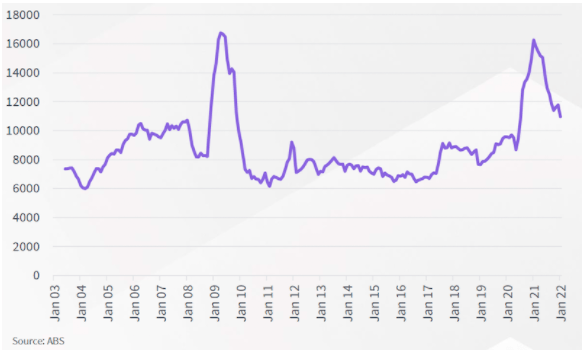
ABS data shows the number of new loans to first homebuyers increasing during the housing market downswing from 2017 to 2019 (graph below).

From June 2020, first home buyer activity surged amid the introduction of the HomeBuilder scheme, used alongside the First Home Loan Deposit Scheme, as well as other state-based grants and stamp duty concessions for first homebuyers.

The result was a spike in first homebuyer activity, which peaked in January 2021. The spike mirrors first homebuyer participation in 2009-10, which marked a temporary boost to the First Homeowner Grant.

Since the January 2021 peak, first home buyer activity has diminished, reflecting higher barriers to entry as housing values substantially outpace incomes.

As of January 2022, loans to first homebuyers numbered 10,964, above the decade average of 8682.

Proportionally, first homebuyer lending comprised 24 per cent of owner-occupier mortgage demand in January, which is in-line with the decade average.

This may have implications for rates of home ownership, which may see an increase on ABS 2016 census numbers.

While the rise in home values has created a greater deposit hurdle for those looking to enter the market, various government schemes introduced throughout 2020 helped to incentivise first homebuyer participation.

Number of FHB Owner-Occupier Loans, Australia 

FHB Owner-Occupier Loans

3. Rents rose 11.8pc to record highs, gross yields fell to record lows

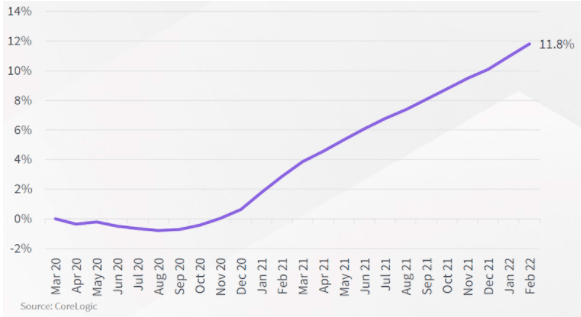
The CoreLogic Rent Value Index, which tracks changes in rental valuations over time, has also surged to new record highs.

The graph below shows the change in the national rent index since the end of March 2020. While rents saw a mild decline of -0.8 per cent between March and August 2020, there was a swift recovery in these values, followed by a surge through 2021.

There are multiple reasons rents have risen. Investor activity had been relatively subdued between 2017 and mid-2020, contributing to rental supply constraints.

Rental supply may also have been eroded through the rise of rental services like Airbnb, which have enabled property owners to pivot to the short-term rental accommodation market.

This latter trend may have been particularly prevalent in tourism destinations across Australia, some of which have flourished amid a rise in domestic tourism in the past two years.

For investors who have recently purchased long-term rental accommodation, rents may have increased due to higher purchasing prices.

Over the course of 2021, annual rent value growth was at its highest levels since 2008.

Across Australia, median advertised rents since March 2020 have increased $30 per week to $470 per week.

The headline numbers hide the diversity of rental conditions.  Through the pandemic, there has been a clear shift in rental preferences towards lower density housing options, where the upwards pressure on rents has been more substantial.

This trend has evolved over the past year, with rental affordability gradually deflecting more demand towards higher density rental options where the cost of renting is more affordable.

However, gross rental yields have declined. This is because gross rental yields are a portion of the purchase price of a property, and purchase prices of properties have grown 24.6 per cent since March 2020, outpacing the 11.8 per cent rise in rents.

Nationally, gross rental yields have fallen from 3.8 per cent at March 2020 to a record low 3.21 per cent as of February 2022. As housing growth has started to slow, this record-low gross rent yield figure appears to have begun stabilising.

Cumulative change in home value index 

 home value index

4. Housing debt levels hit record highs

Rapid increases in housing and rent values in the past two years was largely the result of a sizable reduction in the official cash rate.

With the RBA setting the official cash rate target at 0.1 per cent since November 2020, lower debt costs enabled borrowers to access more credit.

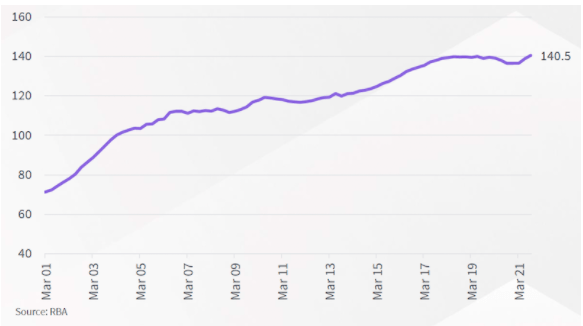
As of January, total outstanding housing credit sat at a record high of over $2 trillion, according to the RBA, while the ratio of housing debt to household income was at a record high 140.5 per cent through the third quarter of (graph below).

This is up from 139.2 per cent in March 2020.While total outstanding credit reached over $2 trillion in January, ABS data shows monthly new finance borrowed for the purchase of property continued to hit fresh record highs through January 2022, at $33.7 billion.

High levels of housing debt, particularly where it has grown faster than incomes, creates a vulnerability in the Australian economy.

However, it is important to frame debt levels in the context of high asset values, and relatively low interest costs. RBA data shows housing interest payments to income have fallen to their lowest levels since 1999, and household debt has trended lower as a portion of housing values.

Ratio of housing debt to annualised household disposable income 

Ratio of housing debt

5. The premium of house prices compared to units hit record highs

Both the composition of the buyer pool and the impacts of Covid may have contributed to a record gap between house and unit values.

Investors, who may have a preference for units, have been a relatively small part of demand through the upswing.

Additionally, detached houses may have been in higher demand as Australians spent more time at home through the pandemic.

Government policies such as the HomeBuilder grant may have also contributed to increased detached housing demand, due to tight construction timelines to qualify.

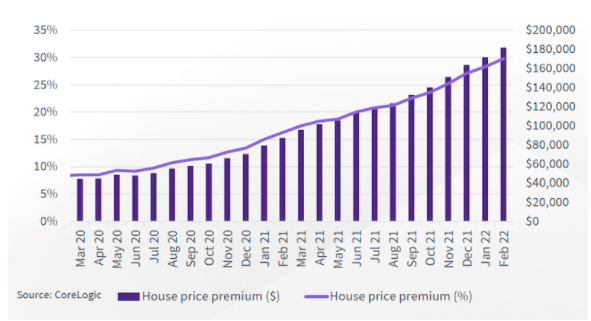
The result is a record high gap between house and unit values. The graph below shows the median house value across Australia was at a record high 29.8 per cent above the median Australian unit value, with a dollar value premium of around $182,000.

This is up from just 8.5 per cent in March 2020, or a dollar value premium of around $44,000 for houses.

Also below, the second graph shows the dollar-value premium of median house values over median unit values in each of the capital cities, with most cities seeing a substantial increase in this value since March 2020..

How much more expensive are houses than units? 

house value

How much more expensive are houses than units? 

house unit

6. The rise of the regions

Migration trends over 2020 and 2021 revealed an uptick in the volume of people leaving cities for regions outside of lockdown periods, and a decline in people leaving regions for cities.

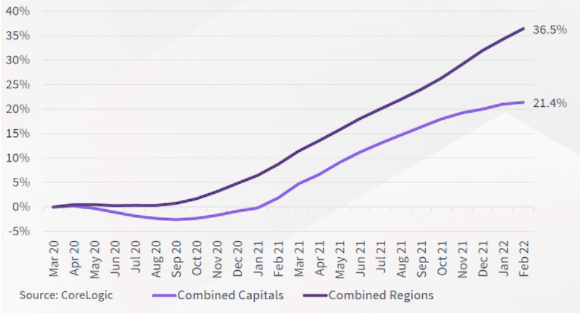
The result has been higher than normal housing demand against unusually low levels of listings across regional Australia, in both the sales and rental market. Value gains across regional Australian dwelling values has been almost 40 per cent since March 2020, while capital city home values have increased around 21% (Figure 7.0).

In lifestyle regions, which have become intensely popular in the past two years, new million-dollar markets have been created across areas such as the Sunshine Coast, the Illawarra and the Gold Coast, where median house values now sit above the million-dollar mark.

Cumulative change in home value index—capital cities vs regions 

 home value index

Where to from here?

The current housing market upswing has delivered extraordinary value gains, providing a significant wealth boost for home owners, but larger hurdles to enter the market for non-home owners.

But since April of 2021, monthly gains in national home values have softened. Arguably, there are more headwinds than tailwinds now stacked against continued growth in the property market, with the potential for sooner-than expected cash rate increases, affordability constraints, and weakening consumer sentiment slowing demand.

While some structural shifts through the pandemic, such as remote work, may sustain demand in regional Australia long term, it is likely that housing values will start to decline on a fairly broad basis later this year.


Article Source: www.theurbandeveloper.com


from Queensland Property Investor https://ift.tt/jPhXd4u
via IFTTT

Gurner, Costa Join Perth Developer Surge

The surge of east coast developers expanding west is gaining momentum after Gurner revealed its $500-million debut development play in Perth.

The acquisitive Melbourne-based developer has partnered with Geelong’s Costa Property Group and Grange Development in a mixed-use apartment project in the city’s affluent inner-west suburb of Nedlands.

It will comprise 275 apartments across three buildings to be delivered in stages along with more than 3500sq m of commercial, entertainment and retail space as well as a health and wellness precinct.

The amalgamated 6000sq m site at 95-105 Stirling Highway was acquired by Costa Property Group for a total of almost $19 million.

Initial plans including four taller towers were rejected and the proposal was subsequently revamped with reduced building heights given the green light early last year.

Gurner will share a 50-50 split in the project with the two original developers.

It said it was currently making changes to the existing permit to create a “true town square” and public realm across the ground level and first floor to create a major drawcard for the surrounding area.

Gurner
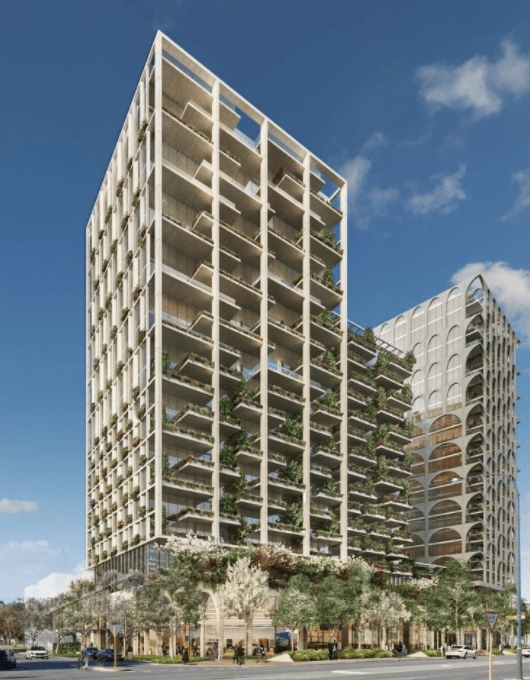
▲ Gurner has partnered with Geelong’s Costa Property Group and Grange Development in Perth’s affluent inner-west suburb of Nedlands. 

The development designed by architects Elenberg Fraser will replace existing automotive dealership showrooms for Porsche and Bentley.

In a statement announcing the push across to the west coast, the group’s chief executive Tim Gurner said Perth was one of the key cities firmly in the company’s sights as it continues expanding its build-to-sell and build-to-rent pipelines in markets where the fundamentals stack up.

“We have had our eye on the Perth market for over eight years now, waiting for the right opportunity—we wanted our first site to be an iconic project of significant scale in a prime suburb, so we could set the tone for future expansion in Perth,” he said.

“It’s a market we believe has incredible potential, particularly in the next five to ten years, as it continues to mature from a mining city into an economic powerhouse.

“The site is a strategic play that will be launched when the market allows it to—with construction pricing such an issue in Perth at the moment, we will wait for the right time to ensure we can offer a superior product to the market.”

Costa Property Group chief executive Carl Schokman said Gurner would “bring unique flair top this development”.

Grange Development managing director James Dibble added the joint venture with Gurner would enable the creation of a “true high-end town centre that the community has been longing for”.

Elenberg Fraser principal Reade Dixon said the project had been designed as “a contemporary reimagining of the architectural character of Nedlands, taking inspiration from the affluent detached houses and their garden settings”.

The latest development play by Gurner is part of a rising tide of east coast developers eyeing off opportunities in the west, including Sydney-based Belingbak, which is currently circling a couple of Perth sites.

Victorian-based affordable housing developer Assemble has partnered with Australian Development Capital and Warburton Group on a $1-billion-plus residential development at the historic Perth Girls’ School site in East Perth.

Gurner’s move into the Perth market follows its expansion into Sydney, Parramatta and the Gold Coast where it is undertaking a $120-million project at Burleigh Heads and a $1.75-billion four-tower development on the former Budds Beach site of collapsed developer Ralan Group.

It also has recently unveiled its Geelong debut with a $300-million mixed-use project near the city’s waterfront.


Article Source: www.theurbandeveloper.com


from Queensland Property Investor https://ift.tt/dO1KSml
via IFTTT

QLD island property listed for less than house in parts of Logan

This spectacular island property off Far North Queensland has two houses, a beach hut and views to rival the Maldives. But this one w...