Monday, 4 April 2022

House Prices Up $17,000, But Falls Ahead

House values increased by $17,000, or 2.4 per cent, nationally over the first quarter of 2022 despite declines in Sydney and Melbourne.

March data from Corelogic shows the national home value index increased by 0.7 per cent in March at a slightly higher rate of growth than the 0.6 per cent increase in February.

Brisbane, Adelaide, Perth and the ACT all experienced stronger growth in house values, while Sydney’s growth rate slowed from 9.3 per cent to 0.3 per cent during the first quarter.

Melbourne also recorded a fall, from 5.8 per cent in April 2021 to just 0.1 per cent.

House values in regional areas rose faster (5.1 per cent) than in capital cities (1.5 per cent).

Change in house values by location

Month Quarter Annual Total return Median value
Sydney
-0.2%
0.3%
17.7%
20.2%
$1,116,889
Melbourne
-0.1%
0.1%
9.8%
12.7%
$805,232
Brisbane 2.0% 6.4% 29.3% 33.7% $749,293
Adelaide 1.9% 5.7% 26.3% 30.7% $602,717
Perth 1.0% 1.9% 7.0% 11.6% $542,338
Hobart 0.3% 2.7% 22.3% 27.3% $731,849
Darwin 0.8% 1.7% 10.6% 17.7% $494,635
Canberra 1.0% 3.1% 21.6% 26.3% $932,704
Combined capitals 0.3% 1.5% 16.3% 19.2% $818,307
Combined regional 1.7% 5.1% 24.5% 29.3% $577,987
National 0.7% 2.4% 18.2% 21.3% $738,975


^ Source: Corelogic

Corelogic research director Tim Lawless said that housing growth was losing momentum.

“Virtually every capital city and major rest-of-state region has moved through a peak in the trend rate of growth some time last year or earlier this year,” Lawless said.

“The sharpest slowdown has been in Sydney, where housing prices are the most unaffordable, advertised supply is trending higher and sales activity is down over the year.

“There are a few exceptions to the slowdown, with regional South Australia recording a new cyclical high over the March quarter and some momentum returning to the Perth market where the rate of growth is once again trending higher since WA re-opened its borders.”

Population, supply and demand

Lawless said the seachange and treechange phenomena may also explain declines in Australia’s largest capital cities as ABS data showed that the regional population rose by almost 71,000, while the combined capital cities population fell by 26,000, mostly due to a sharp drop in Melbourne.

The net annual house price growth rate fell below 20 per cent for the first time since August 2021, at 18.2 per cent.

Housing turnover in the first quarter was 14.3 per cent lower than the same period in 2021 but still 12.2 per cent above the previous five-year average.

The national level of advertised housing stock is 30 per cent below the previous five-year average for the first four weeks of March 2022 but there are differences when the figure is broken down by capital city.

Melbourne’s total advertised supply was 8 per cent above the previous five-year average for the end of March 2022 but Sydney’s was 7.5 per cent higher than 2021’s figure and 2.6 per cent lower than the five-year average.

Annual change in advertised housing stock by location

Annual change (%)
Sydney 7.5
Melbourne 5.5
Brisbane -24.5
Adelaide -19.8
Perth -10.0
Hobart -1.9
Darwin 18.1
Canberra 5.3
Combined capitals -4.0
Combined regionals -22.1
National -12.0

^ Source: Corelogic House Value Index

Lawless said new listings on the market and increased buyer demand were key.

“With higher inventory levels and less competition, buyers are gradually moving back into the driver’s seat,” Lawless said.

“That means more time to deliberate on their purchase decisions and negotiate on price.”

In Brisbane and Adelaide, advertised housing stock levels stayed more than 40 per cent below the previous five-year average levels and between 20 to 25 per cent down on last year.

Regional Australia’s total advertised housing stock levels were 22 per cent below last year’s level and 43 per cent below the previous five-year average leading to strong selling conditions and therefore higher prices.

Interest rates will ramp up pressure

Capital Economics economist Ben Udy predicted that the slowdown in house price growth will turn into a decline.

“We still expect price growth to slow sharply in 2022 and we think that slowdown will turn to outright declines in the eight capital cities before long,” Udy said.

“We think the RBA will begin hiking interest rates from June [and] that will increase mortgage rates and reduce affordability, which is starting to look stretched.”

CBA head of economics Gareth Aird said that while higher interest rates would affect house prices, there would be a lag.

“The cash rate is forecast to lift in June 2022 because the economy will be at full employment and annual wages growth will be on an accelerating path to the desired level of 3 per cent,” Aird said.

“Stronger wages growth will provide a partial offset to rising interest rates on the property market.

“There is a lagged impact on changes in the cash rate and the impact on home prices and the broader economy so we anticipate that home prices will correct lower over 2023 despite our call for the RBA to be on hold for most of next year.”

Aird also said that the downward trend was an automatic correction after high prices in 2021.

“Price gains in 2021 nationally were extraordinary—21 per cent higher over the year as measured by the eight capital city index,” Aird said.

“A correction lower in dwelling prices is a natural response to rising interest rates given it was record low interest rates that drove the phenomenal lift in prices in 2021.”

Home lending remains elevated

New home loans fell by 3.7 per cent month-on-month in February with a decline in owner-occupier housing lending by 4.7 per cent, according to ABS data.

New South Wales’ total decline of 8.6 per cent—with owner occupier lending down by 10.5 per cent and investor lending down by 5.5 per cent—was the key factor.

Total home lending fell in Victoria (-3.7 per cent), Queensland (-2.9 per cent), and South Australia (-6.7 per cent) with growth in Tasmania (2.6 per cent) and Western Australia (1.9 per cent) though both those states experienced a decline in January 2022.

Lending for new home buyers declined the most (-7.2 per cent), lending for new home builds grew (3.1 per cent), owner-occupier lending for existing housing fell (-6.2 per cent) and investor lending declined (-1.8 per cent) for the first time since October 2020.

Investor lending is up year-on-year by 55 per cent, with ANZ predicting that rising immigration will support it in the short term.

First home buyer lending continued to decline by 9.7 per cent month-on-month and 29 per cent year-on-year.

Business construction lending declined by 40.2 per cent in February, and is down 9.4 per cent on a year ago.

Westpac senior economist Matthew Hassan said this showed that January’s housing approvals figure was Omicron-related.

“Construction-related loans were relatively steady in the month, reconfirming that the post HomeBuilder scheme has run its course and that the steep drop in dwelling approvals in Jan was an omicron-related rogue,” Hassan said.

CBA’s head of economics Gareth Aird said the lending figures showed that there was a downward trend.

“The level of lending is still elevated,” Aird said.

“But the change in lending over the month fits in with a property market that is showing signs of cooling, particularly in Sydney and Melbourne.”


Article Source: www.theurbandeveloper.com


from Queensland Property Investor https://ift.tt/7uAMHgN
via IFTTT

Townhouse Developer Lines Up Gold Coast Debut

South-east Queensland developer Horan Group has lodged plans for a 28-storey apartment tower at Broadbeach with the Gold Coast City Council.

It will be the residential developer’s first foray into the Gold Coast market on the back of a pipeline of apartment towers and townhouse developments across Brisbane and the Moreton Bay region.

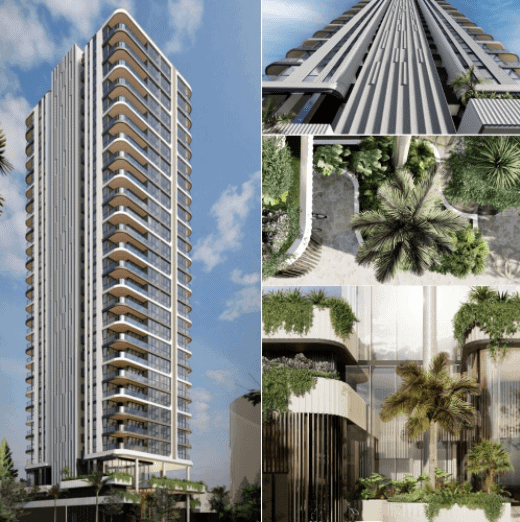
The 120-apartment tower planned for the 1214sq m site at 11-13 Rosewood Avenue would comprise 96 two- and 24 three-bedroom apartments atop a podium.

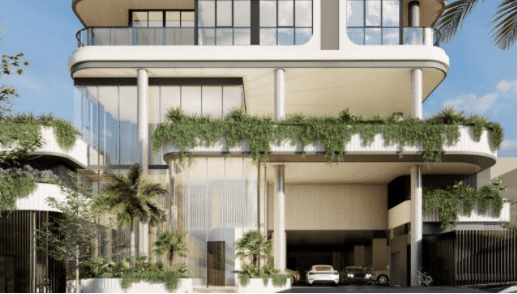
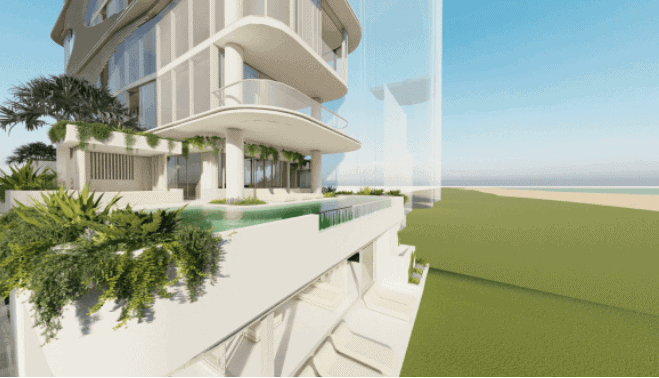
The DBI-designed tower, Rosewood, at the northern end of Broadbeach has been designed to capture coastal character, according to design documents.

“Rosewood embodies natural sculpted geometry,” DBI’s design statement said.

“Elegant soft lines and a play on volumetric forms, both positive and negative, create a carved base and open ground plane, offering a truly distinctive arrival experience breaking down the public and private interface with significant landscaping and cascading planting.

“At the micro level the development offers refined textures, tones and materials creating a quality yet subtle finish for residences reflecting the inspired floral and coastal DNA.”

 architects DBI
▲ A double-height lobby provides street activation through the glass and permeable materiality of the building according to architects DBI. 

An exaggerated double-storey lobby at street level would lead up to a lap pool, day beds, a yoga lawn and residents’ lounge and gym on level 3.

Residents will also be offered and encouraged to use bike storage facilities on level 3.

The Urbis town planning report pointed to Broadbeach as one of the highest-density areas on the Gold Coast and said it was “experiencing ongoing shifts in response to the expectations of the City Plan”.

“This is represented by a range of high-rise residential apartment developments in proximity to the site being approved under the current City Plan, and the suite of similar developments currently being assessed by the council,” the report stated.

 Rosewood
▲ Rosewood will capture coastal lifestyle and views to the ocean and parkland. 

The tower will feature fluted concrete, reflective glazing and contrasting bronze battening to help articulate the building mass.

Architects DBI said the apartment layouts captured the best views while providing screening from neighbouring developments.

The balconies are on the corners of the building and have been designed to create an outdoor room connecting the living and bedrooms externally.

The tower site is about three blocks from the beach overlooking the Broadbeach parklands and close to the Gold Coast’s development spine, the light rail.


Article Source: www.theurbandeveloper.com


from Queensland Property Investor https://ift.tt/xGvMJbR
via IFTTT

Friday, 1 April 2022

Approvals Rise Despite Skyrocketing Construction Costs

The average value of approved homes is up 22 per cent nationally for February, driven by skyrocketing construction and labour costs.

Housing approvals for February increased by 43.5 per cent after a record fall of 27.1 per cent in January, according to ABS data.

ABS construction statistics director Daniel Rossi said increases were recorded across all types of housing, with the apartment sector recording the highest growth.

“The rise in February was driven by a large increase in apartment approvals in New South Wales and Victoria,” Rossi said.

Total apartment approvals increased by 78.3 per cent—Victoria’s total housing approvals increased by 91 per cent while NSW rose by 48.8 per cent.

South Australia’s total approvals increased by 35.9 per cent, Tasmania’s by 12.2 per cent and Western Australia by 8 per cent.

Queensland registered a decline of 14.6 per cent on January and by 34.5 per cent over the year.

CBA’s Stephen Wu said Queensland’s figures were at odds with strong net interstate migration.

“[This] helps to explain rising prices for existing homes and low vacancy rates,” Wu said.

National housing approval by state: February 2022

Private sector houses (number) Private sector houses (monthly % change) Total homes approvals (number) Total homes approvals (monthly % change)
New South Wales 2653 27.2 5543 48.8
Victoria 3246 20.1 7130 91.0
Queensland 1997 6.4 2719 -14.6
South Australia 753 7.6 1127 35.9
Western Australia 1189 11.5 1230 8
Tasmania N/A N/A 285 12.2
Northern Territory N/A N/A N/A N/A
Australian Capital Territory N/A N/A N/A N/A
Australia 10,240 16.5 18,675 43.5

^  Source: ABS

Wu also said that there was unlikely to be a massive increase in housing demand as a result.

“It is unlikely these numbers reflect a sudden spike in housing demand but rather a normalisation after an Omicron-induced fall last month,” Wu said.

“During January, significant labour supply issues impacted on capacity to process approvals, this likely contributed to a much bigger drop, and then now recovery than actual demand warranted.

“Private detached housing approvals numbers increased by 16.5 per cent nationally.”

Wu said that compared to mid-2021 highs due to the HomeBuilder grants, the national level of housing approval was declining.

“This is one measure amongst many that indicate a cooling of the housing market,” Wu said.

“CBA forecasts house prices nationally to be flat in 2022 and down 8 per cent in 2023.”

National housing approvals by sector: February 2022

February 2022 (numbers) Monthly change (%) Yearly change (%)
Total homes approved 18,675 43.5 -7.8
Private sector houses 10,240 16.5 -27.4
Private sector homes excluding houses 7183 78.3 25.5

Non‑residential building approval value rose by 132 per cent but Wu said the month-to-month measure was volatile.

“The big jump was driven by approval of 14 public developments valued at $30 million,” Wu said.

“This is an example of how the measure can be volatile due to significant individual projects.”

Alongside the approval increases was the increase in the average cost of housing.

The average approval value for a house in February 2022 was $388,300, up $70,000 from $318,600 in February 2021, according to BIS Oxford Economics principal economist Timothy Hibbert, who said that it reflected the ongoing issues in the construction sector.

“Surging construction costs continue to show through, with the average cost of approved houses now up a huge 22 per cent nationally over the year to February 2022,” Hibbert said.

In January, Omicron was touted as a reason for low numbers of approvals with planning staff undergoing restrictions or isolation and the issues of labour shortages and supply in construction.

But February and March saw ongoing supply shortages and other concerns with extreme events both at home and overseas, seeing costs across all sectors increase.

“With floods and the conflict in Europe adding to the list of supply issues over Q1-2022, cost pressures continue to mount,” Hibbert said.

Rider Levett Bucknall’s first quarter 2022 tender pricing index outlined several factors that make it hard to predict what the year ahead will be like for the sector.

“The first quarter of 2022 has seen an increase in ‘known unknowns’,” RLB managing director Stephen Mee said.

It highlighted fragmented supply chain issues, Australia’s slow border reopening, current state and federal elections, the economic cost of the floods with potential more rain predicted as factors affecting the industry.

“The demand for contractors, labour, plant and materials continues despite recent lockdowns, supply chain influences and the slowdown of economy due to Covid-19,” Mee said.

“When the true scale of recent devastating floods in both New South Wales and Queensland is known, pressure will be seen in the need for additional materials, plant and labour for the rebuilding efforts within these communities.”

The report also said the war in Ukraine was a key factor.

“The conflict …  is generating flow on effects such as higher fuel prices, potential timber shortages due to unstable imports from Baltic nations, and a generally very unsettled geopolitical landscape,” it said.

Hibbert said increased delays in the construction sector were expected for the remainder of 2022.

“We expect further trend growth in dwelling approvals, but at a much more modest rate in the following months.

“Very low interest rates, strong greenfield land sales over 2021, and elevated pressure on the housing stock will continue to support dwelling construction at an elevated level deeper in 2022.”

RLB predicted that an increase in interest rates by the Reserve Bank might dampen the housing market.

“Looking ahead, all RLB offices are predicting market pricing volatility due to the factors identified above,” the RLB report said.

While Melbourne’s inner-city high-rise residential activity was subdued, medium-density apartment activity was stronger with a predicted continued increase in build-to-rent market activity.

In Sydney, however, demand for inner-city apartments remained subdued while many are taking advantage of increased prices to sell and then buy apartments in prestige suburbs where there is an increased demand.

Mee said the Sydney building costs had increased at a rate faster than inflation.

“This is a trend which looks set to continue due to construction demand outstripping supply for both labour and materials.”  


Article Source: www.theurbandeveloper.com


from Queensland Property Investor https://ift.tt/uYrzUQo
via IFTTT

First-home buyer help will increase property prices, experts warn

Housing experts have criticised the federal government’s failure to seriously address housing affordability in the budget, warning its measures will push up prices and won’t help low-income households.

The Morrison government’s last budget before the federal election expanded the Home Guarantee Scheme (formerly known as First-Home Loan Deposit Scheme) to 50,000 places a year for the next three years, allowing first-home buyers, single parents and regional Australians to get into the property market with a deposit as little as between 2 and 5 per cent.

But experts say the extension of the scheme will do little more than increase property prices, and reveal the failure to address structural issues such as building the half a million homes needed to meet the chronic shortage of supply in the country.

Their comments came as Prime Minister Scott Morrison was asked on Wednesday why the budget offered no assistance targeted at renters, who have seen costs rise, particularly in regional areas.

Mr Morrison said the budget was “about Australians getting into homes”.

“The best way to support people who are renting a house is to help them buy a house,” Mr Morrison told Channel Nine.

“People who are buying houses are renters, and ensuring that renters can buy their own home and get the security of home ownership; that was one of the key promises of this budget.”

housing supply

RMIT University’s emeritus professor of environment and planning Michael Buxton said the budget measure was “pure electioneering” at the expense of new-home buyers and more affordable housing.

“Every time the government announces assistance packages for home buyers it just goes on to the price of housing because developers simply raise the price of the house and land packages they are selling. All these home buyer grants do is stimulate demand, which increases pressure on the supply of houses and prices of housing products. Governments know this. But they get a free kick just before the election, so they keep on making the same mistake and adding significantly to the price of housing in the longer term.”

Independent economist Saul Eslake said schemes that purportedly help first-home buyers, such as the First Home Guarantee, made little sense in addressing affordability.

“Anything that allows people to spend more on housing results in more expensive housing. We have more than 60 years of history to support that,” Mr Eslake said. “I don’t think it’s any coincidence that Australian homeownership rates peaked after that first scheme was introduced and have been going down ever since.”

He believed the federal government cared little about actually improving housing affordability.

“For all the crocodile tears politicians shed for aspiring first-home buyers … the reality is there aren’t many of them compared with the vastly greater number … who own one property [and] who benefit from rising property prices.

“The point is, given that politicians do appear to be so concerned, why do they keep doing things that make it worse for [first-home buyers]?”

Mr Eslake also raised concerns the government was increasing a scheme that allowed first-home buyers to take out a home loan “on wafer thin margins” at a time interest rates were expected to rise, risking negative equity for the individuals and potentially calling on those guarantees for the government.

“You might have thought that someone in Treasury would have advised them against it. Is it really a smart idea to encourage people with limited financial means to borrow on limited equity, especially after house prices went up an enormous amount and interest rates are about to start going up?,” he asked.

RateCity modelling found if someone bought in Sydney using the scheme at the end of this year, they could potentially find their equity, which started at 5 per cent, drop to -6 per cent by the end of 2024, based on Westpac forecasts of a fall in property prices.

University of Sydney professor of urban and regional planning Nicole Gurran said the budget announcement was nothing more than a symbolic measure.

“Unfortunately simply guaranteeing ever larger home loans is almost exactly the opposite of what you’d be doing if you want to extend homeownership in Australia. It’s not even targeted towards new supply.”

‘It’s a real insult, particularly the ongoing subsidy to landlords in the form of negative gearing.’

Professor Nicole Gurran

She said it was a lost opportunity that there were no increases to Commonwealth rent assistance, which would help low-income renters in the private market or community housing.

“That could have really addressed cost of living pressures,” she said. “It’s a real insult, particularly the ongoing subsidy to landlords in the form of negative gearing.”

The Grattan Institute’s economic policy program director Brendan Coates said the scheme was a double-edged sword.

“You’re solving the deposit hurdle, which is a big problem for many young Australians … the challenge is it’s a big expansion of the scheme, so it is likely to put upwards pressure on price,” he said, adding that it would only help those who are already likely to enter the market.

With a pre-tax salary of $125,000 for single applicants and $200,000 for couples, the income thresholds were too high as well, he said, capturing between 80 and 95 per cent of working-age Australians.

He said ultimately the budget highlighted the government’s lack of appetite for real housing affordability reforms.

“It reflects our diminished ambitions for affordable housing. It’s clearly a problem because politicians keep announcing policies that are purported to solve the problem. The issue is they’re not taking tough decisions that they need to make in the long term,” he said, suggesting that tackling capital gains tax and negative gearing would be one measure.

“If a first-home buyer is to win, then somebody has to lose, and that means prices have to go lower, which obviously hurts those who already own property and that is a political reality.“

Housing Minister Michael Sukkar said in a statement that 60,000 Australians had already been supported into home ownership under the Home Guarantee Scheme.

“We want to help even more Australians into their first home or a home that they’ve built for their family, which is why we are expanding the scheme,” he said.

“The government also expects to spend $5 billion on Commonwealth rent assistance and is working jointly with the states and territories to improve housing outcomes as a priority under the $1.6 billion a year National Housing and Homelessness Agreement, as part of an expected Commonwealth housing spend of $9 billion in 2021-22.”


Article Source: www.brisbanetimes.com.au


from Queensland Property Investor https://ift.tt/YjfMZNu
via IFTTT

Shares? Super? Property? What to do with your money in the early years

What sort of advice would you give for those of us in our early 20s who are at a crossroads about what to do with our wages and salaries in the early years. Shares? Investment property? Superannuation?

For starters, I recommend you begin a relationship with a good adviser at as early an age as possible. This will get you experience in a range of assets and strategies while you are young and maximise the effect of compounding.

For most people, a simple option is to make homeownership the first goal – once you have the mortgage under control you can consider borrowing against the home for investment in quality share trusts. I don’t recommend superannuation for young people because of lack of access for such a long time, but I certainly recommend you are well insured, and have wills.

I’m in my early eighties and recently added a downsizer payment to my superannuation account, which is in pension mode. The sum in total is well under the $1.7 million threshold. Is the downsizer amount treated exactly as is the other money with regard to mandatory annual draw-downs and taxation after my death?

Just be aware that there is no $1.7 million limit on how much can be accumulated in pension mode – it’s the maximum that can be transferred to it. After you have made the transfer it’s fine if it goes above that. The downsizer contribution is a non-concessional contribution and as such would not have been added to your pension account – it should now sit in a separate accumulation account.

If you leave it there, which you are entitled to, you will pay 15 per cent tax on earnings within the fund, but there will be no mandatory drawdowns. If you decide to move it to pension mode it will become a tax-free fund with the required minimum drawdowns each year. The death tax applies only to the taxable component of your super left to a non-dependent. The whole of your downsizer payment would be non-taxable, but its earnings will form part of the taxable component.

We are now 70 and have a daughter who is 42 and has lived with a disability. She is in the NDIS scheme and on a disability pension. She has never been in a superannuation scheme and has next to no savings. She has a four-year-old daughter. We will leave her money in our will, which we need to rewrite, and she will inherit half of our house. Five years ago, we took money out of our super and bought her a little house under the government shared equity scheme.

How can we ensure that she does not lose her disability pension after we die? Do we leave instructions to pay off her $30,000 mortgage on her house as well as buy out the government share? Then should we set her up in a superannuation scheme? If we willed the majority of her inheritance into her super scheme and paid off her house, would that ensure that she would safely get her disability pension until she was 55 or older? If the executor just puts her inheritance in the bank she is at risk of being exploited by others. We investigated a trust, but it was far too expensive to run. Fortunately, she has an intelligent and caring brother, our executor, who would look after her needs.

Elder Lawyer Brian Herd tells me that this is a complex issue that cannot be adequately and confidently addressed without lots more information. However, in very general terms, one of the effective ways to protect a disabled person in respect to preserving their pension and protecting them against being exploited is the use of a Special Disability Trust. The parents can set this up now while they are alive or in their wills.

If set up properly, it can ensure she gets the financial benefits of the trust and can keep her disability pension. Make sure you take expert advice.

I am 66 years of age and receiving allocated pension from when I retired from paid employment. I’m selling my investment property and will be making a profit of around $100,000. If I deposit $50,000 into a super fund, which has a balance of $330,000, will I be liable to pay the capital gains tax?

If the property has been held for over a year you are entitled to the 50 per cent discount on CGT which means $50,000 of the $100,000 capital gain will be added to your taxable income in the year the sales contract was signed. You can reduce your taxable income by making a deductible concessional contribution to super, but these are limited to $27,500 a year which includes the employer contribution. However, as your superannuation balance is under $500,000, it may be possible to use the catch-up concessional contribution strategy which would allow you to increase the $27,500 due to contributions not made in full since 2018. Talk to your accountant.

  • Advice given in this article is general in nature and is not intended to influence readers’ decisions about investing or financial products. They should always seek their own professional advice that takes into account their own personal circumstances before making any financial decisions.


Article Source: www.brisbanetimes.com.au


from Queensland Property Investor https://ift.tt/qGzgvhS
via IFTTT

Mosaic amend mixed-use hotel and apartment design for Milton tower to focus on owner-occupiers

Mosaic, led by Brook Monahan, secured 33 Railway Terrace, Milton, a near 1,600 sqm site not far from the Brisbane River, late last year

The ever-busy South East Queensland apartment developer, Mosaic Property Group, has pivoted away from a hotel apartment development at its recently acquired Milton, Brisbane site.

Mosaic, led by Brook Monahan, secured 33 Railway Terrace, Milton, a near 1,600 sqm site not far from the Brisbane River, late last year.

The sale came with plans for a mixed-use hotel and apartment tower, however Mosaic, who are always keenly developing for the owner-occupier, has taken a change of direction, amending the plans to create 113 two and three-bedroom apartments across the 20 levels.


Mosaic Property

They had BDA Architecture amend the design, which will include Mosaic’s signature luxury rooftop amenity level, as well as ground floor retail.

“Intending to appeal directly to owner-occupiers, we have removed the previous plans for 73 hotel/accommodation suites and 500 sqm of office space, making it primarily a residential building,” Mosaic’s website read.

“This move allows us to lower the number of basement levels from four to one, which will reduce the impact of excavation and piling construction works on the local community.

“A strong focus on quality, sustainability, and amenity aligns with our award-winning reputation while at the same time respecting local context and Milton’s distinct character.

“Quality ground floor retail will deliver much-needed activation and rejuvenation, creating the opportunity to cultivate a sense of community within the building and the wider local area.”

33 Railway Terrace, which will be dubbed The Manning by Mosaic, will pursue UDIA EnviroDevelopment certification, implementing a range of initiatives, from design to construction and ongoing maintenance.

Mosaic recently lodged plans for am 81-apartment tower in East Brisbane, which will be one of seven apartment projects they intend to launch across Brisbane, the Gold Coast, and the Sunshine Coast, in 2022.

Mosaic’s track record in Brisbane’s inner-west is enviable. Last year alone they sold out both of their Toowong projects, The Patterson and Kensington.


Article Source: www.urban.com.au


from Queensland Property Investor https://ift.tt/dEuJTGF
via IFTTT

New two-level apartments set for Garfield Terrace, Surfers Paradise

The skinny 32-level tower, designed by Ferro Chow Architects will have just 14 apartments, each spanning two levels. A mega penthouse will crown the top four levels

It’s going to be a big year for both developers and buyers on Surfers Paradise’s luxury beachfront strip.

Local developer Frank Developments, headed by Frank Licastro, will be bringing MIRA, a huge tower designed for the high-end owner-occupier, to 61 Garfield Terrace, offering some of the biggest apartments on the Gold Coast.

The skinny 32-level tower, designed by Ferro Chow Architects will have just 14 apartments, each spanning two levels. A mega penthouse will crown the top four levels.

In their design statement submitted to the Gold Coast City Council, Ferro Chow said MIRA is a unique and exclusively boutique residential project.

Garfield Terrace

“The name MIRA translates to many things and drawn from many origins. These elements are expressed in the architecture, which is a statement of quality contemporary detailing, sophisticated in styling and responding to local context. It adopts innovation in designing with technology and sustainable outcomes. MIRA is as unique as it is timeless.”

Each of the two level apartments will have four bedrooms, one on the lower level, set at the rear of the wing, privately away from the main living, kitchen and dining space.

Upstairs is a further three bedrooms, one being a master retreat with a walk in wardrobe and ensuite. All of the four bedrooms will have ensuites.

The mega penthouse, likely to be one of the biggest ever produced in Queensland, will span from levels 28 to 31.

The 28th level will have four ensuited bedrooms, and a multi-purpose room. Up one floor is the full floor master retreat, with his and hers wardrobes and dual vanity, dual shower ensuite with bath tub. At the other end of the floor are two separate home offices.

The third penthouse level is dedicated to the kitchen and living space. There will also be a separate formal sitting area.

 Garfield Terrace

The penthouse also has its own private roof terrace, where indoor there’s a gym and steam room. Outside will be a swimming pool, fire pit.

The resident amenity will be located on the first level, where there will be a beach-facing pool, a gym studio with sauna, an outdoor barbecue space, and a private dining area.

“A strong desire to connect and create access to the coastline is the inspiration to blend nature and its elements into the architecture.”

Garfield Terrace will be on fire in 2022, with a number of projects lined up for the exclusive beachfront strip.

Iris Capital has lodged plans for its luxury 51-apartment, 38-level at 71 Garfield Terrace, while next door at 75-79 Garfield, Weiya Holdings has submitted its proposal for Aalto, which will have 64 apartments across 38 levels

The luxury developer and hotel operator, KTQ, is also expected to lodged plans on their huge Garfield beachfront site.

Just off the dress circle, Siera Group is putting the final touches to its luxury owner-occupier tower.


Article Source: www.urban.com.au


from Queensland Property Investor https://ift.tt/T3fDqP5
via IFTTT

QLD island property listed for less than house in parts of Logan

This spectacular island property off Far North Queensland has two houses, a beach hut and views to rival the Maldives. But this one w...