Tuesday, 5 October 2021

Gold Coast apartment insights: What happened on the Gold Coast in September

There’s been a continued uptake in residential apartment projects, with some developers still seeing exceptional results in the early weeks of launching

Any fears of oversupply across the Gold Coast were well and truly quelled in September, with data form Urbis suggesting that, if the current sales demand continues and no new developments are released, there would only be around four months of apartments left.

There’s been a continued uptake in residential apartment projects, with some developers still seeing exceptional results in the early weeks of launching.

Urban has wrapped up all of the moves in the apartment market

Chevron One adds further level of luxury, with the new Sky Homes release featuring the Gold Coast’s biggest ever penthouse 
Chevron One

Chevron One 36-44 Stanhill Drive, Surfers Paradise QLD 4217 

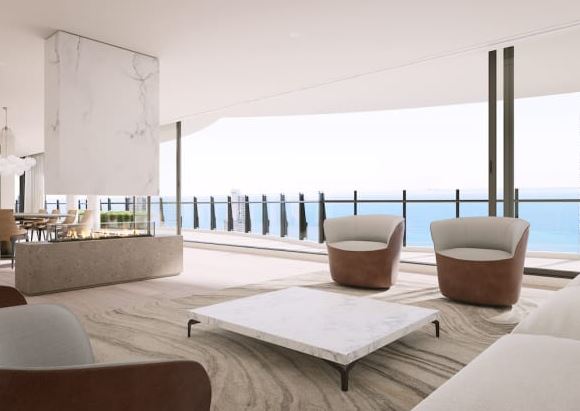
Chevron One, set to reign as Chevron Island’s only luxury high-rise apartment tower, is about to achieve another level of luxury the Gold Coast hasn’t seen before.

The Melbourne-based Bensons Property Group has released its Sky Home collection, starting from levels 31 and rising to level 41, soaring nearly 100 metres in the air. Bensons hadn’t released the high-level apartments, but are now seeing high demand in ultra-luxury, large apartments in the sky.

When complete, Chevron One will be the tallest tower on the exclusive island, and the tallest there ever will be, with the Gold Coast City Council two years ago bringing in strict planning laws, limiting future apartment projects to 33 metres, or 12 storeys.

Victoria & Albert Broadbeach set to launch in October

Victoria & Albert Broadbeach

Victoria & Albert 12-18 Albert Avenue, Broadbeach QLD 4218 

The Victoria & Albert Broadbeach apartment project marketing campaign will commence in October through Colliers.

The $800 million mixed-use development will feature more the 330 apartments across two residential towers rising 30 and 40 levels. Construction is expected to begin mid next year and take two years to complete, the first of many Gold Coast projects envisaged by Iris Capital, Sydney developer, Sam Arnaout.

The East tower known as The Albert will comprise 114 two, three and four-bedroom apartments over 30 levels.

The west tower, known as The Victoria, will rise over 40 levels and deliver 219 apartments of one, two and three bedrooms.

Final five apartments released in Chevron Island’s Allure as locals dominate sales 

Allure

Allure Chevron Island Corner Burra Street & Dalpura Street, Chevron Island QLD 4217 

The final five apartments in the sought-after Allure development on Chevron Island have been released to the market, at a time where the supply of new apartments is nearing record lows.

Each of the apartments left in the Macquarie York-developed, BDA Architect-designed building at 26-28 Dalpura Street, have three bedrooms and a multi-purpose room.

Macquarie York founder Roy Skaf said that the timing of launching Allure, which has netted over $72 million in sales, coincided with a demand for high-quality residences in the heart of the Gold Coast.

Locals, Sydneysiders and Melburnians swoop on Esprit, S&S Projects Rainbow Bay apartments
Esprit

Esprit 217-227 Boundary Street, Coolangatta QLD 4225

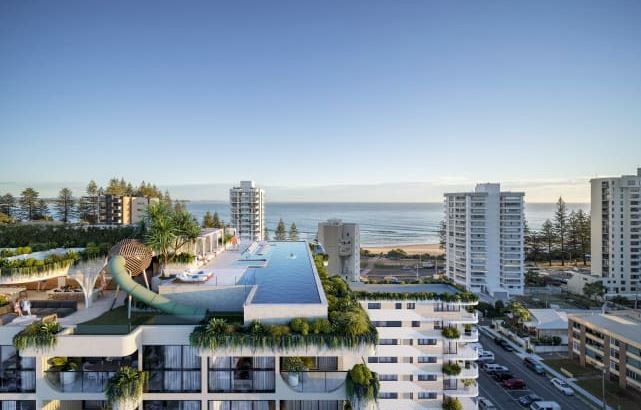
It took just a weekend soft launch for the luxury developer S&S Projects to secure over half of the sales in its latest Gold Coast apartment development, Esprit.

Esprit, at 217-227 Boundary Street, in the sought-after Rainbow Bay location in Coolangatta, sold over half of the 97 apartments on offer in the two interconnected Cottee Parker-designed buildings.

No surprise in the quick-fire sales by KM Sales and Marketing agent Jayde Pezet given the location, the fact Esprit is crowned by Club Esprit, the Gold Coast’s first ever residents-only rooftop wellness centre, and the size of the apartments.

Exclusive first look: Hirsch & Faigen lodge plans for Mermaid Beach apartment tower, Yves 

Following the launch of its boutique Kirra Beach apartment development The Emerson, the Melbourne-based developer Hirsch & Faigen are on to their next project.

They’ve lodged plans for their recently acquired 1,905 sqm Mermaid Beach site, 7-9 Mermaid Avenue at the northern end of Mermaid Beach, which was bought back in June.

H&F, led by the Melbourne lawyer Daniel Faigen and Richard Hirsch, has had ROTHELOWMAN design Yves, which will comprise three 25-level towers. They will home a total of 145 apartments.

Brisbane-based developer Siera lodges Chevron Island apartment development plans 

The Brisbane-based development and construction firm, Siera Property Group, are the latest in a wave of developers heading to the Gold Coast for the first time.

Seira, headed by the managing director and founder Brent Thompson, has laid plans on the sought-after Chevron Island for a 17-level project dubbed Tapestry, paying homage to the Island’s new Home of the Arts precinct.

The plans by the local BDA Architecture will see 83 apartments built on a 1,518 sqm site at 39-43 Darrambal Street, toward the southern end of the island.

Thompson, who sits on the board of UDIA QLD and chairs the Brisbane City Council Policy Committee, sees it as a shift in thinking for the company, who made their name in the Queensland capital developing luxury townhouses in Brisbane’s inner ring.

Sherpa branch out from Palm Beach, lodge plans for Perspective Broadwater in Biggera Waters

The Gold Coast developer Sherpa Property, who have been developing and finalising plans for a number of luxury apartment projects in Palm Beach, are broadening their horizons.

Sherpa, led by chief executive Christie Leet, are continuing the trend of their Perspective collection in Biggera Waters, lodged plans for a boutique apartment development overlooking The Broadwater at 536 Marine Parade.

The exclusive building will have just seven apartments, six full-floor, three-bedroom apartments and a two-storey penthouse overlooking Broadwater and the surrounding parklands.


Article Source: www.urban.com.au


from Queensland Property Investor https://ift.tt/3FaVd7E
via IFTTT

Runaway House Prices Leaves Looming Affordability Issue

For as long as I can recall, housing affordability has been an issue in Australia, but since the 1990s it’s gone from being a periodic cyclical concern to a chronic problem.

The 20 per cent rise in prices during the past year has put the spotlight on the issue again.

With the surge in house prices since the 1990s has come a surge in debt which brings with it the risk of financial instability should something go wrong in the ability of borrowers to service that debt.

In this article, we look at the main issues including :where is the property market now, what’s driving poor affordability, how big is the risk of financial instability, what can be done about both issues, and what’s the outlook for home prices.

Home prices up 20pc in a year

After a dip around mid-last year in response to the initial national coronavirus lockdown, average residential property prices have since risen around 20 per cent, according to Corelogic.

Average Australian property prices at a record high

House Prices

^Source: CoreLogic, AMP Capital 

The gains have been led by houses and regional Australia, with units and Melbourne lagging.

And while the monthly pace of growth has slowed from 2.8 per cent in March, despite east coast lockdowns daily Corelogic data indicates that its remained strong at around 1.3 per cent in September.

The gains have been driven by record low mortgage rates, buyer incentives, a tight jobs market, a desire for more home space as a result of the pandemic and working from home, numerous government home buyer incentives, the “fear of missing out”, and lower than normal listings.

This has pushed average prices to record highs and real house prices to around 23 per cent above their long-term trend.

Poor affordability

As can be seen in the last chart, house prices have been well above trend for nearly the past two decades, which brings us to the issue of chronically poor housing affordability.

Home prices and household debt have gone up together 

House Prices

^Source: ABS, RBA, AMP Capital 

During the past 20 years, average capital city dwelling prices rose 200 per cent compared to an 82 per cent rise in wages. Over the last 10 years dwelling prices went up 58 per cent and wages by only 26 per cent.

The ratio of average house prices to average household disposable income has more than doubled over the past 30 years from around three times to around 6.5 times

Affordability has deteriorated more in Australia than in other comparable countries. According to the 2021 Demographia Housing Affordability Survey, the median multiple of house prices to income for major cities is 7.7 times in Australia compared to 4.8 times in the UK and 4.2 times in the US. In Sydney, it’s 11.8 times and in Melbourne its 9.7 times.

The ratios of house prices to incomes and rents versus long- term averages are at the high end of OECD countries.

While interest rates may be at record lows, the surge in prices relative to incomes has seen the ratio of household debt to income rise nearly three-fold over the past 30 years, going from the low end of OECD countries to the high end.

This is making it far harder for first home buyers to get into the market—it now takes eight years to save for a deposit in Sydney and nearly seven years in Melbourne. While government grants and deposit schemes can help speed this up, the higher debt burden will take today’s borrowers far longer to pay down than was the case a generation ago.

What’s the problem with high home prices?

While a gradually rising level of home prices in line with growth in the economy is healthy and positive for the wealth of existing property owners, very high house prices and debt levels relative to wages pose two key problems.

First, high debt levels pose the risk of financial instability should something make it harder to service loans.

Secondly, the deterioration in affordability is resulting in rising wealth inequality, a deterioration in intergenerational equity (as boomers and Gen Xers benefit, and millennials and Gen Z miss out). Confining more to renting will exacerbate wealth inequality and it is likely contributing to rising homelessness. All of which risks increasing US-style social tensions and polarisation.

What’s the risk of a financial crisis?

Predictions that high debt levels would lead to a crash in property prices threatening the financial system and the economy have been a dime a dozen over the past two decades.

None have come to pass. Most borrowers are able to service their mortgages. Non-performing loans are low and the collapse in mortgage rates has seen household interest payments as a share of income fall to levels last seen in the mid-1980s.

Household interest payments have collapsed 

House Prices

^Source: ABS, RBA, AMP Capital 

However, there is a danger in getting too complacent here. Household debt to income ratios are very high and allowing them to get ever higher runs the risk that there could be a major problem at some point so it makes sense to act pre-emptively to cool things down.

But whether there is the risk of a financial crisis or not, the really big problem is poor affordability.

So why is housing so expensive?

There are two main drivers of the surge in Australian home prices relative to incomes over the last two decades.

First, the shift from high to low interest rates has boosted borrowing ability and hence buying power.

Second, there has been an inadequate supply response to demand. Starting in the mid-2000’s, annual population growth surged by around 150,000 people per annum and this was not matched by a commensurate increase in the supply of dwellings resulting in a chronic shortage (see the green line in the next chart).

The supply shortfall relative to population-driven underlying demand is likely the major factor in explaining why Australian housing is expensive compared to many other countries that have low or even lower interest rates.

And the concentration of Australians in just a handful of coastal cities has not helped either.

Home construction and underlying demand 

House Prices

^Source: ABS, RBA, AMP Capital 

A range of other factors have played a role including negative gearing and the capital gains tax discount for investors, foreign buying and SMSF buying, but they have been relatively minor compared to the chronic undersupply.

And investor and foreign demand have not been drivers of the latest surge.

So what can be done?

The good news is that we may be getting closer to the end of the 25-year bull market in property prices: interest rates are likely at or close to the bottom so the tailwind from falling interest rates is fading; strong home building in recent years and the collapse in immigration may lead to an oversupply of property; and the work-from-home phenomenon may take pressure of capital city prices.

However, there are no guarantees. And things could just bounce back on the demand side once the pandemic recedes and immigrants return. A long-term multifaceted solution is called for.

The first thing to do is to tighten macro prudential controls to slow record levels of housing finance. Raising interest rates is not possible given the weakness and uncertainty hanging over the rest of the economy and crashing the economy to get more affordable housing will help no one.

So, a tightening in macroprudential controls to slow lending is warranted.

With housing credit now growing faster than incomes and at a faster monthly pace than when APRA last started macroprudential controls in 2014, and more than 20 per cent of new loans going to borrowers with debt-to-income ratios above six times, up from 14 per cent two years ago, they are arguably overdue.

This time around investors are playing less of a role in the property boom so macroprudential controls should be broader than in 2014-17.

The main options are restrictions on how much banks can lend to borrowers with high debt-to-income ratios and high loan to valuation ratios, and increased interest rate servicing buffers.

Ideally, first home buyers will need some sort of exemption. With the Treasurer supporting action and the Council of Financial Regulators (RBA, APRA and ASIC) expressing concern about household leverage they look to be on the way, although their implementation still looks several months away.

And last decade’s experience showed that they work.

Of course, this is just a cyclical response and more fundamental policies are needed to address poor housing affordability. Ideally these should involve a multi-year plan involving state and federal governments. My shopping list on this front include:

  • Measures to boost new supply—relaxing land use rules, releasing land faster and speeding up approval processes.
  • Matching the level of immigration in a post pandemic world to the ability of the property market to supply housing.
  • Encouraging greater decentralisation to regional Australia—the work from home phenomenon shows this is possible but it should be helped along with appropriate infrastructure and of course measures to boost regional housing supply.
  • Tax reform including replacing stamp duty with land tax (to make it easier for empty nesters to downsize) and reducing the capital gains tax discount (to remove a distortion in favour of speculation).

Policies that are less likely to be successful include grants and concessions for first home buyers (as they just add to higher prices) and abolishing negative gearing would just inject another distortion in the tax system and could adversely affect supply (although I can see a case to cap excessive benefits).

What is the outlook for home prices?

National home price growth this year is likely to be around 20 per cent with prices already up by around 17 per cent.

Next year is likely to see property price growth slow to around 7 per cent as a result of worsening affordability, reduced incentives, possibly higher fixed mortgage rates, continuing lower than normal immigration and macroprudential tightening.

If the latter does not happen then we are likely to have to revise up our house price forecasts.


Article Source: www.theurbandeveloper.com


from Queensland Property Investor https://ift.tt/3lar0gZ
via IFTTT

Construction Back to Work After Covid Boilover

Thousands of Victorian construction workers will be back on the tools from next week as building sites reopen under strict public health orders, including a new vaccination mandate.

The move follows a tumultuous two-week shutdown prompted by rising numbers of Covid cases across the sector.

Effective from Tuesday, larger construction sites can have up to 25 per cent of workers onsite and on smaller scale projects up to five workers and a supervisor are able to be onsite.

Workers must have had a least one dose of Covid vaccine and carry an authorised workers permit.

If all workers are fully vaccinated and crib rooms “meet best practice” large-scale construction sites can have up to 50 per cent of their workforce onsite. Projects on the state critical infrastructure list will operate at 100 per cent as long as crib rooms follow best practice guidelines.

Under the government’s new construction sector roadmap, the industry and its workers must adhere to a raft of new measures to ensure they can reopen sites and remain open.

Every construction site in Victoria must have a designated fully-trained Covid marshal to ensure compliance with the chief health officer’s directions.

Prior to reopening, operators will be required to attest that they have implemented the directions and every site will need to have an up-to-date vaccination register available for compliance checks at all times.

Teams of authorised workers will conduct checks to enforce the directions, and penalties will be in place for builders and site operators that do not comply—including site shutdowns for significant or repeated breaches.

“We’ve worked really hard with the industry to ensure they can reopen safely,” Victorian treasurer Tim Pallas said.

“But the message is clear: we won’t tolerate it operating in a way that puts the rest of our community at risk.”

Construction

▲ Victorian building sites are set to reopen under strict public health guidelines, including a new vaccination mandate.

The recent shutdown and protests followed the Victorian government issuing a mandate requiring all construction workers to have had at least their first Covid vaccine dose by September 23.

In ugly scenes, hundreds of angry hi vis-clad “rogue” demonstrators stormed the streets of the locked-down Melbourne CBD sparking the deployment of riot police, who used tear gas and fired rubber bullets to control the hostile crowd.

It was conservatively estimated the abrupt site closures and resulting project delays would cost the industry $1 billion a week but some experts believed the total damage bill could be more than $6 billion.

Australian Constructors Association chief executive Jon Davies welcomed the Victorian government’s decision to reopen construction sites from Tuesday.

“The Victorian government has worked closely with the ACA and other industry stakeholders to determine the best way for the industry to show full compliance with the public health measures and directions,” Davies said.

“A tightening of protocols has been part of the solution, along with vaccination requirements. The key to putting an end to restrictions and lockdowns is vaccination.”

Under the new construction sector roadmap, subject to continued high levels of compliance by the industry, workforce caps will progressively increase.

When 70 per cent of Victoria’s population is double vaccinated, large-scale construction projects will return to 100 per cent onsite workforce. All worksite caps will be removed when the state reaches its 80 per cent vaccination target.

All onsite workers must be fully vaccinated by November 13.

Fully-vaccinated workers can travel between metropolitan Melbourne and regional Victoria in order to work onsite.


Article Source: www.theurbandeveloper.com


from Queensland Property Investor https://ift.tt/3BdG6I7
via IFTTT

House Prices Still Soaring Despite Lockdowns

Home values are still rising at their fastest pace in more than 30 years despite lockdowns in Australia’s two biggest cities and the foot coming off the pedal over the past six months.

They jumped another 1.5 per cent in September, bringing the total increase for the first nine months of the year to 17.6 per cent, according to Corelogic.

Nationally, home values have soared by 20.3 per cent over the past 12 months to a median of $676,848, which is up $8334 from last month.

The annual growth rate is now tracking at its fastest pace since the year ending June 1989.

But while the market conditions remain positive, the monthly growth rate is continuing to lose steam and ease back from its peak of 2.8 per cent in March.

Corelogic research director Tim Lawless said worsening affordability—with increasingly higher barriers to entry for non-homeowners and fewer government incentives—was slowly putting the brakes on growth rates.

“With housing values rising substantially faster than household incomes, raising a deposit has become more challenging for most cohorts of the market, especially first home buyers,” he said.

Lawless said a prime example was Sydney, where the median house value at just over $1.3 million now means the typical buyer needs around $262,300 for a 20 per cent deposit.

“The slowdown in first home buyers can be seen in the lending data, where the number of owner-occupier first home buyer loans has fallen by -20.5 per cent between January and July,” he said.

“Over the same period, the number of first home buyers taking out an investment housing loan has increased, albeit from a low base, by 45%, suggesting more first home buyers are choosing to ‘rent vest’ as a way of getting their foot in the door.”

September house prices: Corelogic

House Prices

Corlelogic’s research indicates the monthly change in house values remains positive across all capital cities with Hobart (2.3 per cent) and Canberra (2 per cent) notching up the largest growth, while Darwin (0.1 per cent) and Perth (0.3 per cent) recorded the softest growth.

Generally, house values are still rising faster than unit values with the exception of Hobart and Darwin, where unit values have risen 5.4 percentage points and 4.8 percentage points more than house values, respectively, during the past 12 months.

Across regional Australia, however, unit values rose faster than house values in the September quarter.

“This is probably a reflection of stronger demand for downsizing options and holiday homes in popular coastal markets,” Lawless said.

AMP Capital chief economist Shane Oliver said ultra-low mortgage rates, an ongoing relatively low level of homes for sale along with a resumption of economic and jobs market recovery once lockdowns end, pointed to further home price increases ahead, albeit at a slowing rate.

“A surge in listings once lockdowns end could act as a bit of a dampener on price growth,” he said. “But this looks to be more of an issue in Melbourne where listings have fallen sharply in recent weeks and where economic uncertainty is greater, but less so in Sydney where listings have already been increasing.”


Article Source: www.theurbandeveloper.com


from Queensland Property Investor https://ift.tt/3a6Vnik
via IFTTT

Monday, 4 October 2021

Locals, Sydneysiders and Melburnians swoop on Esprit, S&S Projects Rainbow Bay apartments

Nearly three quarters of buyers were local owner-occupiers, with around 30 per cent coming from Sydney’s beaches and the intercity and fringe suburbs of Melbourne

It took just a weekend soft launch for the luxury developer S&S Projects to secure over half of the sales in its latest Gold Coast apartment development, Esprit.

Esprit, at 217-227 Boundary Street, in the sought-after Rainbow Bay location in Coolangatta, sold over half of the 97 apartments on offer in the two interconnected Cottee Parker-designed buildings.

No surprise in the quick-fire sales by KM Sales and Marketing agent Jayde Pezet given the location, the fact Esprit is crowned by Club Esprit, the Gold Coast’s first ever residents-only rooftop wellness centre, and the size of the apartments.

They range between 109 sqm and 128 sqm and start from $825,000.

The three-bedroom apartments, from 151 sqm to 215 sqm, start from $1,915,000 and top out at $3.7 million.

S&S Projects

Esprit 217-227 Boundary Street, Coolangatta QLD 4225 

Nearly three quarters of buyers were local owner-occupiers, with around 30 per cent coming from Sydney’s beaches and the intercity and fringe suburbs of Melbourne.

S&S Projects boss Paul Gedoun said the demand for luxury pulsating across the southern Gold Coast.

“Esprit is a new luxury residential high-water mark for Rainbow Bay on so many levels and that has been validated by the extraordinary number of sales secured over the weekend,” Gedoun said.

“It is more than a breathtaking place to call home and these astute buyers have recognised and been drawn by its superb location, exceptional level of amenity and superiority of design.”

Gedoun describes Esprit as a project “born from Rainbow Bay’s natural incitement of a restorative lifestyle rooted in enjoyment”.

The rooftop wellness club, Club Esprit, will span more than 1,100 sqm and will feature every wellness and recreational amenity, dubbed as offering an elite-athlete standard of physical and mental rejuvenation.

There is set to be a fully equipped gym, yoga lawn, private remedial treatment room, ice bath, infrared sauna, steam rooms, 25-metre lap pool and poolside cabanas.

The wellness amenity is balanced by an expansive recreational space, including a children’s lawn with play equipment, a private dining room, private terraces, BBQ areas and an outdoor cinema.

“Not only are residents securing an immaculately designed home but essentially also a lifetime membership to one of the most impressive and exclusive wellness clubs to exist on the coast,” said Jayde Pezet of KM Sales and Marketing.

Esprit is S&S Projects’ third venture in the beachfront residential enclave and surfing mecca, following the success of the sellout of the $74 million Flow Residences up the road, as well as the nearby Awaken Residences.


Article Source: www.urban.com.au


from Queensland Property Investor https://ift.tt/3ovVqN4
via IFTTT

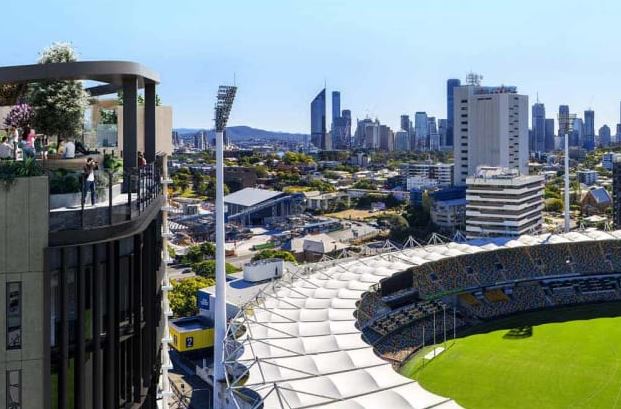
Inside the two-bedroom Silk Lane apartments in Woolloongabba, home of the 2032 Olympics

A relaxed sense of luxury fills every space, with tonal finishes and complimentary textures that create a luxurious hotel ambience

Accompanying the rush of global infrastructure investment set to transform Brisbane in the decade leading up to the Olympics, Silk Lane is among the new residential developments in Brisbane to secure a wave of renewed interest.

Comprising 306 one, two and three-bedroom apartments, Silk Lane delivers a luxury living experience that rises amongst Brisbane’s legendary cricket ground, ‘The Gabba’


Silk Lane

Delivered by Sarazin, each residence is designed as an urban sanctuary, set high above the buzz of the surrounding precinct.

Silk One takes centre stage among the legendary Brisbane cricket ground, ‘The Gabba’, and boasts stunning views of the Brisbane River, CBD skyline and beyond.

Urban takes a look at two feature floorplans available to discerning buyers.  

1. East No.12 

Silk Lane

The floorplan East No.12 has two bedrooms, one tucked away off the kitchen and dining area, with the master positioned at the front of the apartment off the living space.

That curved bedroom, with its own ensuite, will have full floor-to-ceiling glass windows with views across Brisbane.

The apartment, designed by Nettleton Tribe Architects, features generous living spaces, a balcony, built-in robes, laundry room and study space.

2. West No.8 

Silk Lane

The larger two-bedroom floorplan is West No.8, which comes with two bedrooms, two bathrooms and a multi-purpose room.

West No.8 is a more rectangular apartment and features a unique cube style crown and a lighter colour scheme.

“Living here is living Brisbane,” developer Sarazin say. It’s a rare and inspirational blend of serenity and exhilaration.

City and Gabba views are on offer from the balcony or the communal rooftop areas.


Article Source: www.urban.com.au


from Queensland Property Investor https://ift.tt/3l4ENFN
via IFTTT

Bensons appoint ICON to build luxury Chevron Island apartment tower, Chevron One

Chevron One, the luxury apartment tower on Chevron Island, is one step closer, as the Melbourne-based developer Bensons have appointed the well regarded and experienced construction firm, ICON, to build the 41-level building.

Construction will begin October 11 on what will be the only high-rise on the island, with the build expected to take just over three years to complete. Bensons are aiming for completion before Christmas 2024.

ICON are one of Australia and New Zealand’s largest and most experienced construction providers. Currently that have over 75 buildings under construction, including the sell-out Signature Broadbeach tower nearby.

They’ve previously built the modern Auckland apartment, retail and hotel tower, The Pacifica, and recently signed off on the luxury Circular Quay, Sydney apartment development, The Harrington Collection.

On the appointment, Bensons Property Group Managing Director Rick Curtis said “For us, it’s about selecting a builder who is able to not only execute our commitment to the design, quality and timely delivery of Chevron One, but one that can do so in a way that reflects our company mission to deliver exceptional living, whilst making a positive contribution to local communities”.

Chevron One

Chevron One 36-44 Stanhill Drive, Surfers Paradise QLD 4217 

Luke Young, ICON Director of QLD, WA and NT, called Chevron One a landmark project for the Gold Coast.

“ICON are proud to be partnering with Bensons for the construction of the project of such significance. Bensons have an established reputation of developing high quality apartments, which is something that we pride ourselves on being able to offer,” Young said.

“We are excited to be underway.”

Chevron One is the vision of the Bensons chairman, philanthropist and art patron Elias Jreissati, who spends a considerable amount of time each year on the Gold Coast with his wife Colleen.

He wants to create an offering that epitomises understated luxury that Melbourne is accustomed to, combined with uninterrupted panoramic views over Surfers Paradise, all within an exclusive island location.

Bensons has just released their Daylight Sky Homes collection, occupying the upper levels of the tower, with the best, never-to-be-built-out views of Surfers Paradise. They start from $1.5 million, and range up to $15 million, the price tag for the huge 1,000 sqm sub penthouse.

They held back the apartments, but there has been such demand for luxury, larger apartments in the area.

Jreissati will be hanging on to the penthouse, the largest ever created on the Gold Coast spanning nearly 2,000 sqm.

Designed by global architecture practice Marchese Partners, Chevron One is built on the principle of a strong integration between indoor/outdoor living, with oversized balconies one of the key liveability factors.

There’s around 2,000 sqm of resident amenity, including two pools (one an outdoor lagoon style with a floating cinema and one indoor), an indoor/outdoor beach, a gym, a number of spas, a residents lounge with BBQ area and an outdoor sun-lounge on the podium level.


Article Source: www.urban.com.au


from Queensland Property Investor https://ift.tt/3mf5Cqk
via IFTTT

QLD island property listed for less than house in parts of Logan

This spectacular island property off Far North Queensland has two houses, a beach hut and views to rival the Maldives. But this one w...