Thursday, 2 September 2021

Construction Strong Despite Softer Approvals

New dwelling approvals have declined for a fourth consecutive month as the surge in detached housing, propelled by the federal government’s HomeBuilder stimulus, continues to drop out of the system.

Australian Bureau of Statistics figures for July show a seasonally adjusted total of 17,601 dwelling approvals, a dip of 8.6 per cent on June’s result and marked the lowest monthly total since January.

Building approvals were weighed down in part by a 24 per cent decline in detached house approvals from their peak of 15,443 in April to 11,671 in July.

The monthly decline in the total number of dwellings was broad-based, with private sector houses falling 5.8 per cent and approvals in private sector dwellings, excluding houses, falling 12.3 per cent.

Housing Industry Association economist Angela Lillicrap said the latest date indicated that the majority of HomeBuilder projects had now moved through the approvals process and were set to begin construction in the coming months.

Dwelling approvals 

Construction

^Source: ABS, AMP Capital 

Across July, the largest falls were in South Australia, down by 17.1 per cent, and Tasmania, 15.3 per cent.

Queensland, benefiting particularly from interstate migration, was the only state to record an increase in dwelling approvals with a 9 per cent rise.

Private house approvals in Queensland also rose, up 8.3 per cent in seasonally adjusted terms.

The return of lockdowns across parts of New South Wales and Victoria meant approvals for private sector houses fell 4.2 per cent and 7.3 per cent respectively.

The rebounds from last year’s disruptions combined with major stimulus from ultra-low interest rates and HomeBuilder are now seemingly fading.

Detached-house approvals remain 43.2 per cent up on the same quarter last year but the rate of decline has now increased after falling by half the rate, 10.1 per cent, in June.

ANZ economist Adelaide Timbrell said the numbers were likely to fall.

“While the wind-back of fiscal support was always expected to lead to a fall in residential building approvals, the decline has been faster in recent months than the market expected,” Timbrell said.

“We know much of the increase in approvals represented a bring-forward of activity, so we expect to see more declines.”

AMP Capital chief economist Shane Oliver shared that sentiment and said the increased rate of decline meant that the outlook for building approvals leading into 2022 was less certain.

“Next year risks seeing a slump in home building reflecting the pull forward of activity due to HomeBuilder, reduced demographic demand after two years of zero immigration and the risk that the latest lockdowns impact homebuyer sentiment,” he said.

Construction

▲ The HomeBuilder scheme has estimated to have created over $30 billion of construction projects. 

Between March 2020 and March 2021 dwelling approvals have posted an 84 per cent increase.

Monthly approvals have since declined 25 per cent but are still up 21 per cent year on year and are sitting 8.6 per cent higher than their pre-pandemic level.

Private house approvals remain 28 per cent higher than July 2020 and 36 per cent higher than July 2019.

Construction for the foreseeable future remains strong, with more than 121,000 HomeBuilder grant applications lodged, four times more than what was initially expected.

As a knock-on effect, almost four in five builders are now reporting “significant delays” in being able to secure concreters, joiners and bricklayers ,and an increase of up to 10 per cent in the cost of materials and specialist trades or labour, according to lobby group Master Builders.

Residential property construction times have also doubled across 2021.

A single-storey dwelling, which required six to eight months to build in 2019-2020, now requires between 12 to 16 months, while a double-storey home, which had previously taken 10 to 12 months, is now taking 14 to 20 months to complete.


Article Source:www.theurbandeveloper.com


from Queensland Property Investor https://ift.tt/2WHnwJq
via IFTTT

Developer Contributions ‘Inflating New House Prices’

Developer contributions are having an inflationary effect on housing affordability and impeding supply, according to new research.

The National Housing Finance and Investment Corporation’s (NHFIC) research report on developer contributions has found that the infrastructure charges are increasingly acting like a “tax on new housing”.

Developer contributions, or infrastructure charges, are levies charged by local and state governments to help pay for local infrastructure, focusing on water, drainage, footpaths, parks and community facilities.

NHFIC cites the unpredictability and opaque nature of infrastructure charges as a core issue in developers’ feasibility studies.

It also says often this charge becomes an on-cost for homebuyers or end-users, impacting housing affordability significantly.

According to NHFIC, developers have to factor in infrastructure charges at around 10 per cent of total development costs—but generally higher in New South Wales, and up to $85,000 per greenfield dwelling development in some areas.

Greenfield developer contributions (per lot)

Region Indicative cost Developer contributions (% of total cost)
NSW $58,000 11%
Vic $52,000 11%
Qld $32,000 8%

^Source: Developer Contributions report, NHFIC

Housing Industry Association chief executive of industry policy Kristin Brookfield said development contribution schemes had become a significant hindrance.

“This is partially due to the large range of infrastructure now included and the gold-plated standards being sought by local and state governments,” Brookfield said.

“A conscious decision to shift the majority of the upfront costs on to new housing developments emerged in New South Wales almost two decades ago … Sydney is the most expensive [but] other states have taken the same approach and we are starting to see costs increase in most other states.”

Brookfield said the upfront charge was the least efficient way to recover infrastructure costs and was impacting the costs of new homes.

“The HIA would support further research to assess the unintended impacts of high and poorly functioning development contribution systems nationally and the implications these taxes are having on new homebuyers,” she said.

NHFIC said it was a “concern that the application, scope and administration of developer contributions is a relatively opaque area of public policy” and that there was little information available to compare states and territories.

An analysis of Sydney councils showed up to 88 per cent of all funds raised through developer contributions between 2017 and 2020 were earmarked for social infrastructure.

Around one-third, on average, was earmarked for essential infrastructure with a stronger nexus to new housing developments.

According to NHFIC, improved policy co-ordination and optimising risk to share cost arrangements between councils and developers would increase new housing supply.


Article Source: www.theurbandeveloper.com


from Queensland Property Investor https://ift.tt/2WNJyKB
via IFTTT

The coastal towns where prices have changed little in five years

Property prices have been soaring across Australia’s coastal towns and suburbs, but there are still some pockets where prices have not raced ahead.

House prices have grown rapidly in many sea-change destinations in recent years, skyrocketing even further in some areas amid the pandemic and rise of remote working.

In Byron Bay on the NSW’s north coast, Sunshine Beach in Noosa, and Somers on the Mornington Penisula, median house prices have more than doubled in the space of five years.

However, growth has been more subdued in other markets, Domain data shows, with prices in some suburbs and towns near the coast still back at, or close to, their 2016 levels.

Here’s our pick of some of the markets where house hunters can get into the market at a similar price to five years ago. But be warned, house prices in many of these locations are on the rise.

Cairns, QLD

While house prices in Cairns were up 16.3 per cent over the five years to June to a median of $465,000, there are suburbs a little inland with softer price growth.

Earlville, about four kilometres south-west of the city centre, recorded a median house price of $395,000 over the year to June, up about 4.1 per cent on 2016 prices.

While further south, median prices in the neighbouring suburbs of Edmonton and Bentley Park climbed 3.9 per cent and 1.7 per cent, respectively, over the five-year period.

Coastal towns

18 Goodsell Drive, Bentley Park QLD 4869 

Selling agent Therese Plath, principal of Ray White Cairns South, said there was strong demand for affordable homes in Bentley Park and Edmonton from locals looking to upsize, interstate tree-changers and investors.

At Bentley Park’s median house price of $371,250, buyers might get a four-bedroom house with one or two bathrooms, Ms Plath said but noted buyers on such a budget were increasingly having to look at three-bedroom homes due to rising prices over the past year. Edmonton’s median now sits at $366,000.

Though not directly on the coast, Bently Park and Edmonton are within a 40-minute drive of multiple beaches and 20 minutes from the Cairns Esplanade, while Earlville is about 10 minutes closer.

West End, Townsville, QLD

Further south, but still in north Queensland, prices in Townsville’s West End are now 1.8 per cent higher than 2016 prices, after the median fell 2.4 per cent over the year to June to $351,250.

Those looking to buy at the suburb’s median house price could expect to secure a three-bedroom, one-bathroom house within a 10-minute drive of Townsville’s foreshore.

Coastal towns

1 Harold Street, West End QLD 4810

Across Townsville, the median house price is up 4.4 per cent over the past five years to $340,000.


Article Source: www.domain.com.au


from Queensland Property Investor https://ift.tt/2Y68YDx
via IFTTT

Habitat Development Group set for 200 apartment St Clair Apartments in Birtinya on the Sunshine Coast

“We’ve been building on the Sunshine Coast for the past 16 years and this is the most buoyant market I’ve ever seen,” Habitat boss Cleighton Clark said.

The local Sunshine Coast developer Habitat Developments are set for a 200-apartment development on the Maroochy River.

Habitat, led by director Cleighton Clarke, has lodged plans with the Sunshine Coast Council for St Clair Apartments at 930 & 931 Birtinya Boulevard, located directly adjacent to Lake Kawana.

There will be 100 apartments in each eight-level building, made up of 46 two-beds, 119 three-bedroom apartments, making up 60 per cent of the development, and 35 four-bedroom and penthouse apartments.

Habitat Development Group managing director Cleighton Clark said they are excited about the project and look forward to Habitat playing its part in the growth and evolution of the Birtinya lakeside precinct.

“There’s already been some exciting momentum created by Stockland and other strong local developers,” Clark said, adding that the Birtinya precinct was awarded the 2020 National UDIA Award for Master-planned Development.

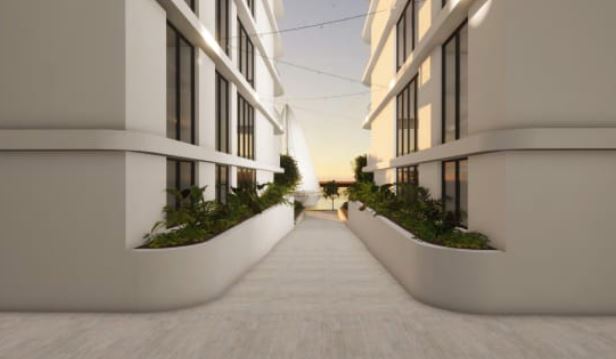
K Architecture designed the buildings which curve in sync with each other, and are separated by a walkway to the water.

Habitat Development

Each building will rise eight levels from the ground, with a further two-levels of basement parking which will hav over 400 parking spaces.

“St Clair has a really elegant design and will capitalise on its prime waterfront location,” Clark said.

“This prime waterfront development promises stunning ocean views and across Lake Kawana to the east as well as committed green space to the west.”

There will be 13 apartments on each level, apartment from the ground floor which will have 12 and level eight which will have 10.

Some of the bigger penthouse-style apartments have over 50 sqm plus outdoor space, with a handful of courtyard apartments with over 90 sqm of gardens.

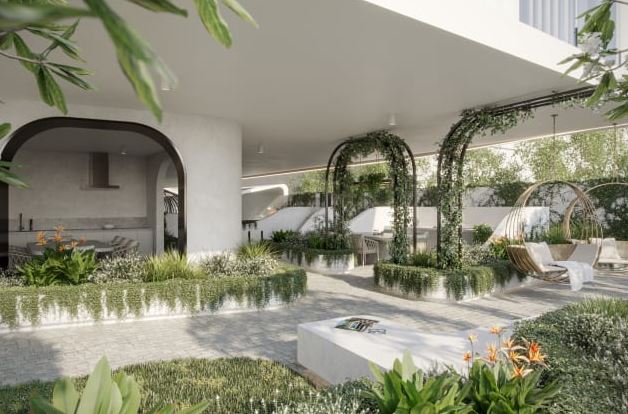
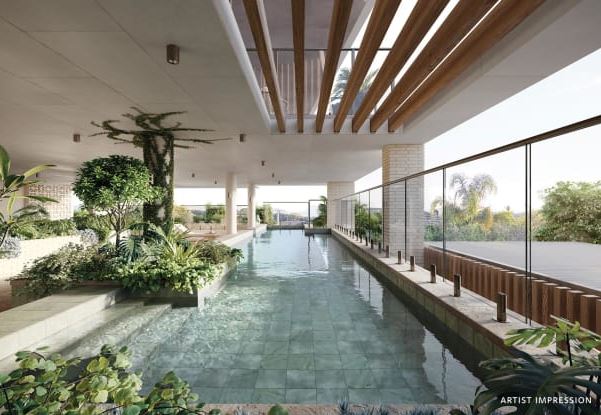
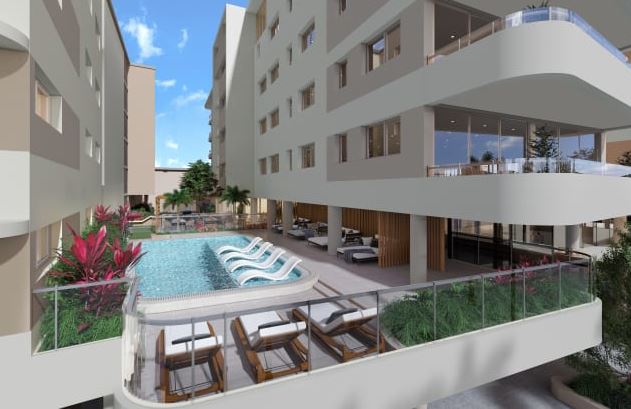
The ground floor homes the amenity, including a 25 metre swimming pool, communal dining room and a games and play lawn. The rooftop terrace will have seating and dining areas.

Habitat Development

Habitat are hoping the project will start in mid to late 2022, and will be completed in Q1 2024, pending approval.

Habitat recently sold out their $83 million Maroochydore project Market Lane, and are set to launch another Maroochydore project, The Corso, next year.

Clark said his enthusiasm for the Sunshine Coast has been reinforced by the strong market interest in Habitat’s existing projects under construction which are all completely sold out.

“We’ve been building on the Sunshine Coast for the past 16 years and this is the most buoyant market I’ve ever seen,” Clark said.

“Rental vacancy rates have been low on the Sunshine Coast for a number of years, but vacancy is incredibly tight and we’ve witnessed very strong rental growth in the last year. Apartments are renting for 20% more than they were 12 months ago in projects we’ve completed and continue to manage.

“St Clair provides us another project to commence alongside some of our other exciting projects we’re planning in 2022.”


Article Source: www.urban.com.au


from Queensland Property Investor https://ift.tt/38sKCpH
via IFTTT

What happened to Brisbane apartment values over August?

Queensland has benefitted from record low vacancy rates, with southern state dwellers heading north during the pandemic over 12 months ago

Brisbane apartment values surged over August, jumping 1.4 per cent, according to the monthly update from property data firm CoreLogic.

It was the Queensland capital’s best performing month in 2021 and took the rolling quarterly gains to 1.6 per cent, following 0.8 per cent gains over July and 0.7 per cent in June.

Values are now 7.7 per cent higher than they were at the start of 2021, when the median apartment price was $390,000. Now it’s $425,000, CoreLogic calculate.

Brisbane apartment values

Silk One 825-847 Stanley Street, Woolloongabba QLD 4102 

Queensland has benefitted from record low vacancy rates, with southern state dwellers heading north during the pandemic over 12 months ago.

The June 2021 quarter data from the Real Estate Institute of Queensland showed that nearly two thirds of local government areas in Queensland recorded their lowest or equal lowest residential vacancy rates since 2010.

Of the 35 local government areas, 20 saw their vacancy rates tighten, 10 remained static and five saw them slightly rise in the June quarter.

Brisbane’s vacancy rate dropped from 2.1 per cent to 1.7 per cent from the previous quarter. The Gold Coast’s remained static at a tight 0.6 per cent and the Sunshine Coast’s was slightly higher, from 0.5 per cent to 0.6 per cent.

Brisbane apartment values

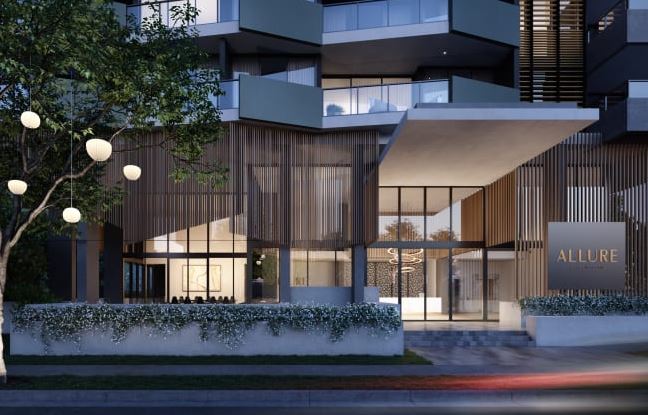
Allure Chevron Island Corner Burra Street & Dalpura Street, Chevron Island QLD 4217 

Around Greater Brisbane, Ipswich stayed at one per cent, Logan slightly tightened from 1.1 per cent to one per cent while Moreton Bay remained the same at a low 0.7 per cent. Redland was tight at 0.5 per cent, falling from 0.6 per cent, while the Scenic Rim dropped from 0.8 per cent to 0.7 per cent.

REIQ chief executive Antonia Mercorella said the perfect storm of conditions thrown up by COVID-19 appeared to still have their grip on vacancy rates in the Sunshine State.

“It seems the COVID-19 phenomenon of people moving to the regions for lifestyle purposes is still having an effect on vacancy rates,” Mercorella said.

“With more people taking the opportunity of working remotely and not having to commute regularly to their offices, they are succumbing to the lure of moving to a region where they can enjoy a sea or tree change lifestyle.

“This could be reflected in regions around Brisbane such as the Gold and Sunshine Coasts and even further afield, where people can work remotely and commute to the capital city when necessary.

“The lifestyle motivation is strong interstate, with people seeking an escape to Queensland from the southern states. According to the Australian Bureau of Statistics (ABS), Queensland recorded a net gain of 9800 interstate migrants in the December quarter – the highest of any state or territory.

Brisbane apartment values

Bide 21 Longland Street, Newstead QLD 4006

“Greater Brisbane also recorded the highest net internal migration rate of any capital city in the December quarter – with 4800 arrivals. By comparison, Sydney and Melbourne lost 9300 and 8500 people respectively. In terms of overseas migration, half a million Australian expats have returned since the pandemic began.

“In central and northern Queensland, a ramping up of the resources industry and a recent revival of tourism’s fortunes (at least until the current interstate lockdowns) could be attracting workers to these regions, putting pressure on vacancy rates.”

Mercorella said while owner-occupiers had been dominant in the residential property sales market, investors were becoming more active.

“In May according to the ABS, the number of new housing loans taken out by investors rose 13.3 per cent to $9.1 billion – the highest amount seen since June 2015.

“A return of investors to the market will likely increase the number of rental properties available and reduce pressure on vacancy rates, potentially providing some relief for those struggling to find a rental.”


Article Source: www.urban.com.au


from Queensland Property Investor https://ift.tt/3gQ7fZA
via IFTTT

The rise and rise of Regional Queensland property markets continue

Unit markets have also done well, with 85% of locations recording annual rises in their median unit prices

EXPERT OBSERVER

Our research for the upcoming Spring edition of The Price Predictor Index shows that Regional Queensland has set another record, with 171 locations with rising sales activity and 96% of all locations achieving price growth in the past year.

The total of 171 rising markets is the highest recorded in the six years of these quarterly surveys. From 2015 to 2020, the average number of rising markets in our surveys of Regional Queensland was 49. The three surveys in 2021 have recorded 157, 146 and 171 rising markets.

The latest increase in the number of upwardly mobile markets comes despite a further softening in the Sunshine Coast market. The Sunshine Coast Region and Noosa Shire combined still have 19 rising markets, but this compares with 25 three months ago and 37 six months ago. This distinct pattern of a softening market comes after three very strong years in this market, and prices are still rising.

property markets

Nature by Cube 49 The Esplanade, Cotton Tree QLD 4558 

Elsewhere in Regional Queensland, it’s very much a story of growth. The Gold Coast, Cairns, Bundaberg, Gladstone, Mackay, Rockhampton, Toowoomba and Townsville have all increased the number of suburbs with rising sales volumes.

The Gold Coast is the most prolific municipality in the nation: 37 of the 49 Gold Coast City suburbs ranked in this report have rising trajectories with sales activity. This is an incredibly strong market, thriving on the Exodus to Affordable Lifestyle trend and going to another level every time Sydney and Melbourne experience lockdowns. Southport is a particularly prolific market: quarterly sales have been 197 288 382 496 505.

property markets

Villea Palm Beach 26 Mawarra Street, Palm Beach QLD 4221 

The other standout market is Toowoomba, where 14 of the 17 suburbs ranked in this report are categorised as growth markets.

In the Far North of the state, both Cairns and Townsville have buoyant markets. Cairns has 16 suburbs with rising sales activity and Townsville has 11. In Palm Cove in Cairns, quarterly sales activity has been 25 54 69 78 92.

property markets

In Central Queensland, nine of the 10 Rockhampton suburbs in this report are rising, while 10 of the 14 Mackay suburbs have increasing sales activity. In Yeppoon, quarterly sales have been 41 73 99 107

Gladstone is continuing its revival after a long slump: 8 out of 12 suburbs now have rising sales activity and there is growing evidence of price recovery.

Bundaberg continues to emerge as a growth city, with 8 out of 11 suburbs delivering rising sales activity.

There is also rising momentum in the Whitsundays market.

PRICES: The Sunshine Coast region is the undoubted star of price growth performance in Regional Queensland, although the Gold Coast is also challenging.

Across Queensland, 96% of locations have recorded growth in their median house prices in the past year. Almost 60% of locations have risen more than 10%.

property markets

La Mer 3580 Main Beach Parade, Main Beach QLD 4217 

Unit markets have also done well, with 85% of locations recording annual rises in their median unit prices.

Across the region covered by the Sunshine Coast and Noosa councils, there are 33 suburbs and towns where the median house price has increased by at least 12% in the past year.

Sunrise Beach is up 37% to $1.2 million, while Minyama has risen 29% to $1.5 million. Markets which have increased 20-22% include Coolum Beach ($850,000), Wurtulla ($745,000), Woombye ($635,000), Twin Waters ($970,000), Maleny ($750,000), Mt Coolum ($760,000), Mudjimba ($920,000) and Noosaville ($1.35 million).

The Gold Coast has 26 suburbs with annual growth in house prices above 12%, led by Currumbin (up 24% to $1.18 million) and Bundall (22% to $1.27 million). Tallai, Tugun, Coomera, Labrador and Miami have all lifted 18-19% in the past year.

property markets

Allure Chevron Island Corner Burra Street & Dalpura Street, Chevron Island QLD 4217 

The Hervey Bay market is lifting, headed by the 25% rise in Pialba ($400,000), while six other suburbs have increased more than 12%.

Mackay has several growing suburbs, led by 30% in Sarina ($375,000) and 25% in East Mackay ($425,000). Gladstone’s recovery continues, with double-digit median price growth in six of its suburbs.

In Far North Queensland, Cairns has multiple growth locations, including Palm Cove (up 30% to $770,000), Caravonica (30% to $500,000) and Port Douglas (27% to $750,000). The revival in Townsville is being led by the 30% rise in North Ward ($735,000).


Article Source: www.urban.com.au


from Queensland Property Investor https://ift.tt/3gMNToj
via IFTTT

Marquee prepare launch for Palm Beach apartment development, Northshore

In a joint venture with LHPP, Northshore will have 93 residences, starting from two-bed apartments and ranging to a small collection of villas

The South East Queensland developer Marquee Development Partners are continuing to bulk up their apartment development pipeline, following the speed of their latest Kirra Beach.

Marquee’s Kirra Beach apartment development SOL didn’t even hit the market, selling out all 46 apartments in the in-demand Kirra Beach in just 10 days.

The development, which will go down as one of the Gold Coast’s fastest sell-outs, was Marquee’s eighth project, and they’re set to launch their ninth.

Their next Gold Coast project, Northshore, is north of the Kirra hotspot, in the equally booming north Palm Beach area.

Marquee

In a joint venture with LHPP, Northshore will have 93 residences, starting from two-bed apartments and ranging to a small collection of villas, and will only be available for resident-only buyers.

The development will feature five-star resort-style amenities which come standard in Marquee’s Developments. Residents will have access to a waterfall edge pool with Baja deck and floating sunbeds, outdoor dining, cinema, full-sized gym, work from home facilities and extensive wellness offerings.

Marquee’s sales director Azura Griffen says the open plan apartment designs will blur the lines between inside and out.

In Marquee’s pipeline is another Kirra Beach project, down the road from the sold-out Sol.

At 4 Musgrave Street, the 14-level tower with 39 apartments has been designed by the Brisbane-based Ellivo Architects.

In their brief submitted to the Gold Coast City Council, Ellivo note the importance that all primary indoor and outdoor living areas are oriented to the beach.

Marquee’s sales director Azura Griffen said there was an unbelievable amount of interest levelled at SOL since the public received their first glimpse.

“We never could have predicted the almost instantaneous sell-out,” Griffen said.


Article Source: www.urban.com.au


from Queensland Property Investor https://ift.tt/3jxGg6J
via IFTTT

QLD island property listed for less than house in parts of Logan

This spectacular island property off Far North Queensland has two houses, a beach hut and views to rival the Maldives. But this one w...